


 Norman Mailer's Lego City Of The Future

 this lovely Royal Canadian Air Force plate--the likes of which I dined off of at Father-son banquets in the 60's--& much more at Make It Old's Photostream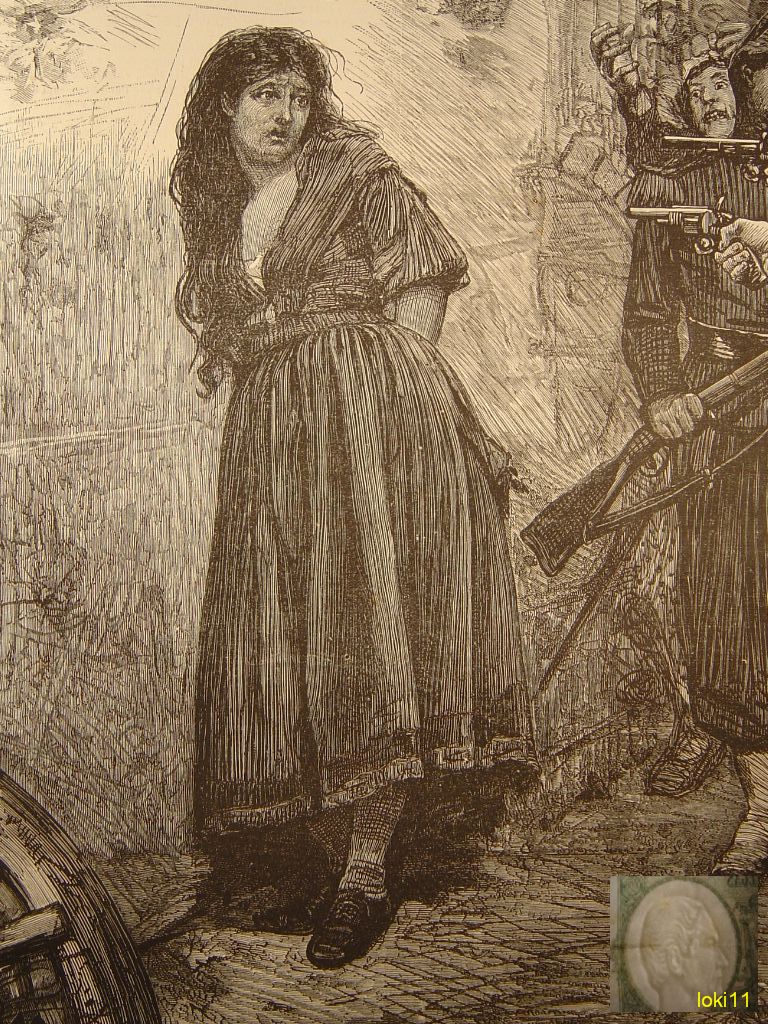
“For most Americans, the image of the pétroleuse setting
buildings and homes ablaze (either to delay the invasion of troops or
simply to gratify her ”love of riot”) confirmed the connection between
feminist agitation, political revolution, economic conflict, and
cultural catastrophe. “Pale, frenzied, … [and] fierce,” as a poet in
Harper’s Weekly described them, the pétroleuses presented a nightmarish
specter of women aggressively repudiating bourgeois norms of womanhood.
Many witnesses (and subsequent commentators) identified the arsonists as
prostitutes, morally dizzied by their distance from domestic life,
hystericized by their all-too-public vocation and their abandonment to
their bodies. Most commentators did not distinguish the pétroleuses from
other women of the [Paris] Commune, all of whom they saw as rowdy,
reckless affronts to nature. Given over to unfeminine theorizing and
public speaking, these woman formed clubs where they urged the
legalization of divorce and women’s sexual independence. (As historians
have subsequently detailed, they also smoked pipes, toted pistols, and
wore revolutionary garb, delighting audiences, male and female, who
thronged the clubs to see them.) These feminists led marches and fought
at the barricades. During the Bloody Week, they reportedly not only set
fire to homes and civic buildings but also plundered the city, gave
enemy soldiers poisoned wine, and murdered officers after they had
surrendered – atrocities recounted in dozens of histories, short
stories, novels, poems, and plays about the Paris Commune though the
turn of the century.”
- D.A. Zimmerman, Panic!: Markets, Crises, & Crowds in American Fiction (2006)
Les Pétroleuses were the sex-workers, witches, and lady proles of the
Paris Commune whose ‘love of riot’ burnt Paris to the ground.
Pétroleuse Press is based in Brooklyn.


