Monday, September 04, 2006


Pluto stays put in Maine's solar system

Driving south, it's hard to miss large planets like Jupiter, which is 5 feet in diameter and weighs close to a ton. The solar system ends 40 miles later with tiny Pluto, only 1 inch in diameter, mounted on the wall of a visitor information center.

"We're not planning on taking down Pluto," said McCartney...

...If astronomers keep discovering new dwarf planets, McCartney conjectured, the solar system model could one day stretch all the way down the coast."


 Posted by Picasa

Sunday, September 03, 2006


A Letter From Hammertown


Only the densest
dentist insect overtones
dare drop into the valley

from the Sunday construction
so impatiently at ten begun above
though the rate of such things

varies more than you'd think:
some build as if session men
called out by the union

to short time the undergrowth
for the X-box simulation
of the Birth of Skiffle, others

as if flown in on Blackhawks
to build an interrogation centre
five days ahead of the army--

outward facing polished tin walls to
conduct heat, spirit animals
laminated into every post for

low grade hallucination
when the Redbull & castor oil
kick in--others as if alders were

closing in with a green man's leering
face and that aggregate should
be poured down his throat right now.

Over in Townsite
evolved sparrows turn into lawn
ornaments at will &

the sleepy subsonic rumble
of Chase River thru the park is
unbroken either by the snap of skateboard

veronicas or the dream-
speech of dogbarks & east of that
the Kingdom of the Cranes and Spiders

occupies the Arena
where Fats Domino once stood
where the roll of the Second Line

& the two-four of the bass drum
echoed from the Foundry
across Newcastle Channel.


 Posted by Picasa

new EP from Colleen

"We started to record the music boxes but things turned out differently from what I had expected; the melodies weren't that interesting and were actually quite cheesy. And then I happened to bend and stroke the comb (the music box is basically like a rolling pin, kind of like a big pin full of small staples or spikes and they're the ones that, when the pin turns or revolves, lift the blades from a metal comb) and, struck by what I heard, started to experiment with the comb itself. When played manually with my thumbnails or with the glass harmonicum's small mallets, a very rich sound is produced that's reminiscent of gamelan, marimba, and glockenspiel, and all sorts of sounds mixed into one. I recorded some really old and battered music boxes and some of my own which are either hand-cranked or mechanical; I also used a componium, a music box into which you feed strips of paper that you punch yourself, like a player piano."


Posted by Picasa

reconsideration of Leszek Kolakowski

"Those who cheer the triumph of the market and the retreat of the state, who would have us celebrate the unregulated scope for economic initiative in today's "flat" world, have forgotten what happened the last time we passed this way. They are in for a rude shock (though, if the past is a reliable guide, probably at someone else's expense). As for those who dream of rerunning the Marxist tape, digitally remastered and free of irritating Communist scratches, they would be well-advised to ask sooner rather than later just what it is about all-embracing "systems" of thought that leads inexorably to all-embracing "systems" of rule..."

 Posted by Picasa

Saturday, September 02, 2006


"Crane" by Sylvia Matas, one of an interesting group of artists at the Winnipeg based Other Gallery
 Posted by Picasa
The Crock of Appeasement

"Taken seriously, the doctrine of "no appeasement" on the right would mean we are stuck in perpectual war, always doomed to be on the offensive, always dedicated to gobbling up more of other people's territory and wealth even at the expense of living in constant dread of being blown up and being forced to give up the civil liberties which had made American civilization great.

It would never be possible to negotiate a truce with any enemy. That would be appeasement. It would never be possible to compromise. That would be appeasement. It would never be prudent to withdraw troops from a failed war. That would be appeasement. In other words, the rightwing doctrine of "no appeasement, ever" actually turns you into Hitler rather than into Churchill.

But we are anyway not stuck perpetually in the late 1930s, and it is not the only exemplary period in history to which we can resort for our metaphors and our courses of action.

The Iraq crisis, for instance, is clearly an odd sort of neocolonialism, which can only ultimately be resolved by decolonization. Decolonization in the 1950s and 1960s was also denounced as "appeasement," but it was the only right course..."

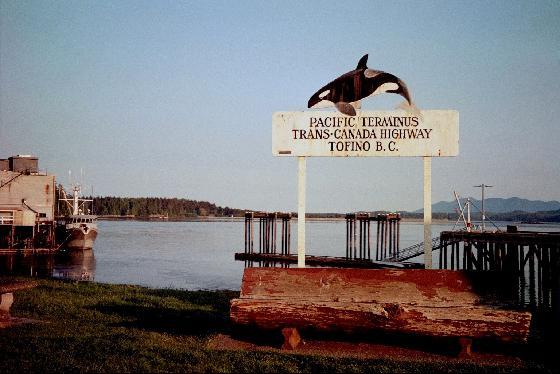
Anger Wells Up in Dry Tofino

"In a press conference today, Tofino mayor John Fraser said that his long-term management strategy was to "hope for rain." "


 Posted by Picasa
Must Read


"What we have watched unfold for a few decades, I have argued, is a broad reversion to 19th-century political form, with free-market economics understood as the state of nature, plutocracy as the default social condition, and, enthroned as the nation’s necessary vice, an institutionalized corruption surpassing anything we have seen for 80 years. All that is missing is a return to the gold standard and a war to Christianize the Philippines..."

Il Conformista

A tentative big toe
dipped in the Cold Lake
of rapture but as short
of real immersion as
the old army game,
balls dropping unnoticed
into the back pant pocket
or something like that--
an argument bolstered
by mere proximity (clack) is
the reassertion
of a dialectic that
never was, that
between looking
for something &
just looking, say
Dominique Sanda
as sleek as a panther
which I then didn't get
favoring the pale brunette,
but the desire, however
"gripped", that links
junkie, riot, sugarcone,
the washed away &
the washed out is
what muscles us up
for Mussolini, the
"primal scene" in that sense
comes free with every
Kodak. That's why
its called "software".


 Posted by Picasa

Friday, September 01, 2006


Poem for Tofino

At six o'clock
inside the Moose Hall
the first spaghetti
supper of the fall:
a word or thought
experiment gone awry
& the whole of Tuff City
went boneless dry; as
boilers and radishes
barged Alberni Canal
they found out the acquifer
was not their pal.
From Bremen they came,
zucchini kayak and a dream--
of walking sticks
with little badges
avocado wraps
with nothing added--
not to be told
to dig their own hole.
We voted you in
because we didn't need you--
we should have checked
your leaning lean-to--
& now the dew's bribed
off the lawn & from
infant eyes the tears
are drawn, the Empire's
here but the water's gone.

Posted by Picasa

don't miss Bertolucci's best movie "The Conformist" on TURNER CLASSIC MOVIES tonight & some good stuff all week including Frances Farmer in "The Toast of New York", Anthony Mann's epic "The Fall of the Roman Empire", Don Siegel's "Charley Varrick", Fellini, Dreyer, Bergman &c &c...

 Posted by Picasa

amongst "Crusade" reading just finished Karen Armstrong's "Holy War" and am looking forward to Christopher Tyerman's God's War, which has apparently supplanted the mighty Sir Steven Runciman's three-volume account, which put the "gist" in magisterial. Runciman's 2000 Telegraph obit is worth printing in full both as the record of an an amazing life and a priceless example of that paper's ownership of the genre (slipping a little lately though--I noticed they had Glenn Ford as the good guy in "Yuma" yesterday, tsk)--


Sir Steven Runciman

SIR STEVEN RUNCIMAN, who has died aged 97, was the pre-eminent historian of the Byzantine Empire and of the Crusades; he was also a celebrated aesthete, gentleman scholar and repository of the civilised values of Edwardian times.

His magnum opus was the three-volume A History of the Crusades, published
between 1951 and 1954. In its preface Runciman set out his credo, one that
derived from Gibbon, and stressed the claims of grand narrative over narrow
analysis: "I believe that the supreme duty of the historian is to write
history, that is to say, to attempt to record in one sweeping sequence the
greater events and movements that have swayed the destinies of man."

For Runciman, the Crusades were not romantic adventures but the last of the
barbarian invasions, albeit ones that brought about the dominance of Western
civilisation. His opinion was partly determined by his sympathy for the
Byzantine Empire, often at odds with the Crusaders and an oasis of culture
surrounded by unappreciative savages.

It was a condition with which he identified. His prodigious work on a
culture previously damned as effete was largely responsible for the
blossoming of Byzantine studies in Britain.

His view of the historian's task - and his belief that one writes to be
read - demanded that he aim as much at a non-specialist audience as at
fellow academics. His lucid style was admirably suited to this, with a
simplicity and dispassion that had been the ideal of Byzantine
iconographers. The popular success that his books enjoyed showed that others
too came to enjoy the labyrinthine complexities of Levantine history.

They had in Runciman a surefooted guide who could render the past visible
and familiar, as in a memorable description of the messianic Peter the
Hermit - "his long, lean face horribly like that of the donkey he always
rode".

James Cochran Stevenson Runciman was born in Northumberland on July 7 1903. He was the second son of Walter Runciman, a member of Asquith's cabinet, and the grandson of a shipping magnate, Lord Runciman.

Steven's father was created Viscount Runciman of Doxford in 1937 and the
next year led the mission that persuaded the Czech government to make
concessions to Hitler.

Steven's mother was the first woman to take a First in History at Cambridge
and the first wife of an MP also to secure a seat in the Commons. Steven
breathed a rich mixture of political gossip (he would go on to meet all but
three of the 20th century's Prime Ministers).

One of his first memories was of waiting for suffragettes to carry out their
vow to break the windows of the houses of Cabinet Ministers. With their
afternoon walk imminent, Steven and his young sister inquired of the two
burly ladies waiting outside when their protest would begin, since they were
anxious not to miss the fun. The campaigners left in a huff, and the
Runcimans' was the only house left undamaged that afternoon.

Steven could read Latin and Greek by the time he was six. He was a frail
child, with a shyness that he learned to hide but never overcame. In 1916 he
went to Eton as a King's Scholar; the future George Orwell was in the same
election. In his first year, however, Runciman grew seven inches and his
worried parents kept him at home for much of the remainder of his
schooldays. He passed the time reading history books.

Consequently, when he did see his teachers he thought them ill-informed. "I
wish this boy was kinder to me," read one master's report.

In 1921, Runciman went up as a History scholar to Trinity College,
Cambridge. There he found in the fashionable pose of aesthete a mask for his
diffidence. Among those invited to take roseleaf jam in his rooms - home to
a large green parakeet named Benedict - were two other beautiful young men,
the aspiring arbiters of taste Stephen Tennant and Cecil Beaton.

Beaton hastened to copy Runciman's liking for Fair Isle sweaters and used
him as one of his first models, photographing him with a budgerigar on his
finger.

Runciman took every opportunity to travel, visiting Istanbul for the first
time in 1924. There he was told by a gypsy, correctly, that he would have
several illnesses but live to a ripe old age. Runciman had a lifelong
fascination with the supernatural (and the naturally superior); he later
read the tarot for King Fuad of Egypt and became court fortune teller to
King George II of the Hellenes.

On graduating in 1924, Runciman approached practically the only scholar then
interested in Byzantine studies, J B Bury, and asked to be his pupil. Bury
initially refused, relenting only when he learned that Runciman could read
Russian; he promptly thrust articles in Bulgarian at him and told him to
come back in two weeks.

Later lessons proved difficult to arrange, as Bury's overprotective wife
took the precaution of burning all letters addressed to him. Runciman was
reduced to waylaying Bury during his daily walk along the Backs.

Runciman's dissertation on a 10th-century Byzantine emperor secured him a
Fellowship at Trinity in 1927, and provided material for his first two
books, The Emperor Romanus Lecapenus (1929) and The First Bulgarian Empire (1930).

His researches had, however, been interrupted by pleurisy, and in 1925 he
recuperated by sailing to China. In Peking, he was summoned to play piano
duets with the ex-Emperor, Henry Pu Yi, who told him that he had chosen his
forename out of fondness for the Tudors; his chief concubine, whom he hated,
was named Bloody Mary.

When Runciman returned to Cambridge, he found that the college servant with
whom he had boarded his parakeet refused to relinquish the bird, telling him
sternly: "Polly likes it here."

Runciman taught at Cambridge until 1938 and was fondly regarded by his
students, among them Noel Annan and Guy Burgess. He also continued to travel widely, collecting people and places. His charm brought him friends that
included George Seferis, Benjamin Britten and Edith Wharton, while his taste
for exalted company brought encounters with, among others, the royal houses
of Bulgaria, Romania, Siam and Spain.

He saw much of the world before it subscribed to a uniform culture. In 1934
he visited Bulgaria, encountering the Istanbul-bound Patrick Leigh Fermor,
and on the way back from Mount Athos, Greece, in 1937 helped to deliver a
baby. It was, he said, "a sight no innocent bachelor should see".

In Siam he saw a ghost, which dissolved before his eyes, but missed lunch
with Bao Dai when the young ruler of Vietnam broke his leg playing football;
"not," thought Runciman, "a suitable pastime for an Emperor."

During the Holy Fire ceremony in Jerusalem at Easter 1931, he and Princess
Alice, who were seated in a gallery, amused themselves by dropping molten
wax from their candles on to the bald patch below of the unpopular garrison
commander; the irate soldier was the future Field-Marshal Montgomery.

In 1937 Runciman inherited a substantial sum from his grandfather. This gave
him the freedom to surrender his Fellowship and concentrate on writing
books. When the Second World War broke out, he was recovering from severe
dysentery and his health meant that he was only offered the untaxing job of
censoring letters written by the Army's Cypriot muleteers. Burgess got him a
job instead with the Ministry of Information and he was soon back in
Bulgaria as press attache.

Runciman always denied that he had in fact been a spy there, but in the
records of the Italian Secret Service, which fell into British hands, he was
rated "molto intelligente e molto pericoloso".

In 1941 the Germans advanced on Sofia, and Runciman narrowly escaped death when a bomb exploded in the Istanbul hotel to which he had been evacuated.
The device, concealed in the embassy luggage, had been set to explode aboard
the train from Sofia; but the train reached Istanbul an hour early, and the
bomb killed eight people in the lobby as Runciman was inspecting his room.

In 1942 Runciman was appointed, at the Turkish government's request,
Professor of Byzantine Art and History at Istanbul University. There he
researched his history of the Crusades. Having used his diplomatic contacts
to smooth the accession of the young leader of the order, he was also made
an honorary Whirling Dervish.

From 1945 until 1947 Runciman headed the British Council in Greece, and from 1960 until 1975 he was President of the British Institute of Archaeology at
Ankara, but after the war he concentrated principally on his writing.

Among his later books was his only excursion into modern history, a
biography of the White Rajahs of Sarawak commissioned by the Colonial
Office, but more notable were The Fall of Constantinople, 1453 (1965) and a
compelling analysis of the massacre in 1282 that ended Charles of Anjou's
hopes of controlling the Mediterranean, The Sicilian Vespers (1958).

His study of dualist heresies, The Medieval Manichee (1947), remains a
standard work, while Byzantine Style and Civilisation (1975) is an exemplary
introduction to the subject.

Although he disliked public speaking, Runciman took up many requests to give
lectures so as to see new places, especially in America. In Alaska in 1970
he visited Eskimos who still followed the Russian Orthodox rite, and at Las
Vegas when he played the slot machines he twice hit the jackpot.

Runciman later became fond of the sunshine of Bahrain, but Greece remained
his first love. He was chairman of the Anglo-Hellenic League (1951-67), and
was instrumental in restoring the ill-maintained grave of Rupert Brooke on
the island of Skyros.

He was much honoured by the Greeks, who named a street after him in the
well-preserved Byzantine town of Mistras. He also became Grand Orator of the
Greek Church, historically the senior lay member of the Patriarch's synod.

For many years he kept a house in St John's Wood, London, where he gave
garden parties, but after he and his brother sold the island of Eigg, which
they owned, in 1966, he made his base a peel tower in Dumfriesshire.

There he kept hens and an excellent collection of drawings, including
sketches of Greece by Edward Lear. He was a Councillor Emeritus of the
National Trust of Scotland.

His partial memoirs, A Traveller's Alphabet (1991), recalled places he had
visited from Athos to Zion, but revealed little of himself. In person he
possessed courtesy, wit and culinary skill, and could, when treated as the
fusty academic that he was not, deploy an armoury of filthy stories. Four
hundred guests came to his 90th birthday party; his cake took the shape of
the greatest of all Byzantine churches, Hagia Sophia.

In 1999, he presented the London Library (of which he was the
longest-serving life member) with a much needed new lift. A plaque within in
it bears his name and the Latin inscription Plurimi pertransibunt et
multiplex erit scientia (the Vulgate version of Daniel xii 4: "Many shall
run to and fro and knowledge shall be increased").

Earlier this year, aged 97, he made a final visit to Mount Athos to witness
the blessing of the Protaton Tower at Karyes (the capital of the monastic
community), which had been refurbished thanks to a gift from him.

Steven Runciman was knighted in 1958 and appointed a Companion of Honour in 1984. He was elected a Fellow of the British Academy in 1957.

He remained a bachelor, but liked the idea of marrying an elderly Spanish
Duchess in order to become a Dowager Duke; the title, he felt, would have
rather suited him."


Posted by Picasa

Thursday, August 31, 2006


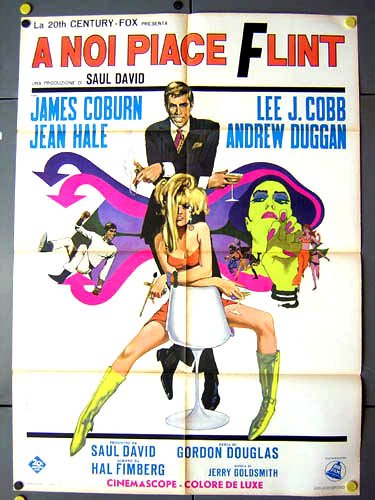
if the crawl I just glimpsed (don't ask) on the golf channel is to be believed, as of tomorrow Shaw Cable are replacing it with American Movie Classics--a mixed bag on offer but just glancing I saw "Ronin", Fritz Lang's "Return of Frank James", "In Like Flint" (one of my "movies of the year" in 1967) &c &c


 Posted by Picasa

farewell Glenn Ford--apart from anything else, his performance in "3:10 From Yuma" remains--despite even Samuel L. Jackson in "Jackie Brown"--the definitive incarnation of smiling Elmore Leonard villainy...
 Posted by Picasa

Wednesday, August 30, 2006


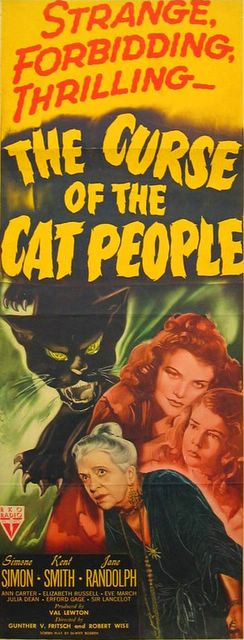
fine site devoted to innovative low-budget producer Val Lewton (1904 - 1951) (aka "Kid Chill") producer of such subtly terrifying classics as "Cat People" & "The Seventh Victim", forever associated in my mind with the watching of the CBC late show in the late 70's in Kevin's 7th Ave. Vancouver basement suite while drinking tea and consuming wheels of rye crisp dampened with mustard... Also a collection of Lewton's scripts which includes a few, like the Hogarthian "Bedlam" and Bocklinesque "Isle of the Dead" which I have yet to see...


Posted by Picasa

via Plep these lovely LA painted product murals

 Posted by Picasa

Tuesday, August 29, 2006


Slough by John Betjeman (1906-84)


Come friendly bombs and fall on Slough!
It isn't fit for humans now,
There isn't grass to graze a cow.
Swarm over, Death!

Come, bombs and blow to smithereens
Those air -conditioned, bright canteens,
Tinned fruit, tinned meat, tinned milk, tinned beans,
Tinned minds, tinned breath.

Mess up the mess they call a town-
A house for ninety-seven down
And once a week a half a crown
For twenty years.

And get that man with double chin
Who'll always cheat and always win,
Who washes his repulsive skin
In women's tears:

And smash his desk of polished oak
And smash his hands so used to stroke
And stop his boring dirty joke
And make him yell.

But spare the bald young clerks who add
The profits of the stinking cad;
It's not their fault that they are mad,
They've tasted Hell.

It's not their fault they do not know
The birdsong from the radio,
It's not their fault they often go
To Maidenhead

And talk of sport and makes of cars
In various bogus-Tudor bars
And daren't look up and see the stars
But belch instead.

In labour-saving homes, with care
Their wives frizz out peroxide hair
And dry it in synthetic air
And paint their nails.

Come, friendly bombs and fall on Slough
To get it ready for the plough.
The cabbages are coming now;
The earth exhales.


Posted by Picasa

Happy anniversary, baby. Posted by Picasa

Monday, August 28, 2006


Jim Rockford's Answering Machine Messages--


"This is Mrs. Owens with the Association For A Better Malibu. Thanks for your contributions. We've made great strides, but it would help dear, if you could move your trailer..."
 Posted by Picasa

it's Hedy Lamarr all day at TCM including "Ecstacy" at 1900 PST. She was also an inventor--


"They began talking about radio control for torpedoes. The idea itself was not new, but her concept of "frequency hopping" was. Lamarr brought up the idea of radio control. Antheil's contribution was to suggest the device by which synchronization could be achieved. He proposed that rapid changes in radio frequencies could be coordinated the way he had coordinated the sixteen synchronized player pianos in his Ballet Mechanique. The analogy was complete in his mind: By the time the two applied for a patent on a "Secret Communication System," on June 10, 1941, the invention used slotted paper rolls similar to player-piano rolls to synchronize the frequency changes in transmitter and receiver, and it even called for exactly eighty-eight frequencies, the number of keys on a piano..."


Posted by Picasa

Sunday, August 27, 2006


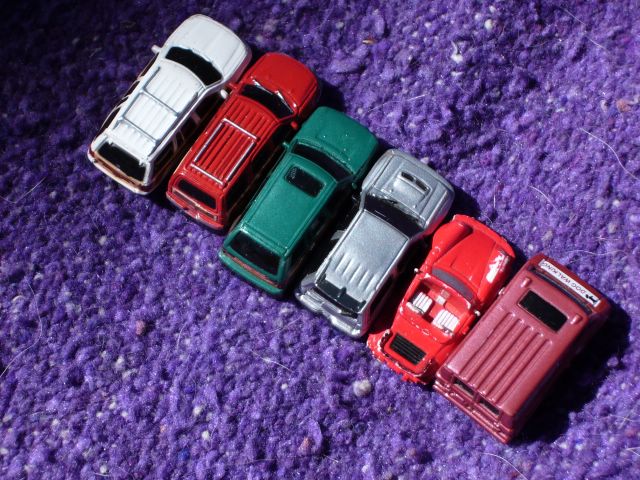
Alister's cars from Europe. Posted by Picasa

Fog in the valley this morning. Posted by Picasa

Saturday, August 26, 2006


interview with filmmaker Craig Baldwin

"Here's the deal. I'm an archivist. I have these films and I am interested in these issues which have to do with these alternative histories, right? So the thing is, I don't want to make just an escapist film. For that matter, I don't want to make just a formal film, as a lot of people in my world do - I'm talking about avant-garde filmmakers. And I don't disavow them. I won't. But I'm not interested in doing that. I'm interested in making films of ideas, and to make them using the visual language of cinema. That's my strength. Not research or writing, though I can do a little writing and I can do a little research. What I can do is collage, and I have the archive..."

 Posted by Picasa

Friday, August 25, 2006


David Foster Wallace on Roger Federer as Religious Experience

"This thing about the ball cooperatively hanging there, slowing down, as if susceptible to the Swiss's will -- there's real metaphysical truth here. And in the following anecdote. After a July 7 semifinal in which Federer destroyed Jonas Bjorkman -- not just beat him, destroyed him -- and just before a requisite post-match news conference in which Bjorkman, who's friendly with Federer, says he was pleased to "have the best seat in the house" to watch the Swiss "play the nearest to perfection you can play tennis," Federer and Bjorkman are chatting and joking around, and Bjorkman asks him just how unnaturally big the ball was looking to him out there, and Federer confirms that it was "like a bowling ball or basketball." He means it just as a bantery, modest way to make Bjorkman feel better, to confirm that he's surprised by how unusually well he played today; but he's also revealing something about what tennis is like for him. Imagine that you're a person with preternaturally good reflexes and coordination and speed, and that you're playing high-level tennis. Your experience, in play, will not be that you possess phenomenal reflexes and speed; rather, it will seem to you that the tennis ball is quite large and slow-moving, and that you always have plenty of time to hit it. That is, you won't experience anything like the (empirically real) quickness and skill that the live audience, watching tennis balls move so fast they hiss and blur, will attribute to you..."


 Posted by Picasa

Sunday, August 20, 2006

The War Party

"But the fact remains that the U.S. Army is the only significant force standing between Iran and it's closest allies, and thus between Iran and Israel. If, as it now seems, Washington and Jerusalem both perceive Iran as the primary threat (and/or target for aggression) in the region, then there is no real distinction between America's occupation of Iraq and Israel's intended re-occupation of southern Lebanon. They are, in essence, both part of the NEXT war.

It seems increasingly probable that that war will come soon -- perhaps as early as November or December, although more likely next year. Israel's failure to knock out Hizbullah with a rapid first strike has left the neocons even deeper in the hole, enormously ratcheting up the pressure to try to recoup all losses by taking the war to Damascus and Tehran.

In other words, it's almost time for the ultimate "flight forward" -- the one that finally pushes the Middle East into World War III.

What's become clear to me is that the Democratic Party (even it's allegedly anti-war wing) will not try to stop this insanity, and in fact will probably be led as meekly to the slaughter as it was during the runup to the Iraq invasion. Watching the Dems line up to salute the Israeli war machine, hearing the uncomfortable and awkward silence descend on most of Left Blogistan once the bombs started falling in Lebanon, seeing how easily the same Orwellian propaganda tricks worked their magic on the pseudoliberals -- all this doesn't leave too much room for doubt. As long as World War III can be sold as protecting the security and survival of the Jewish state, I suspect the overwhelming majority of Democrats, or at least the overwhelming majority of Democratic politicians, will support it..."

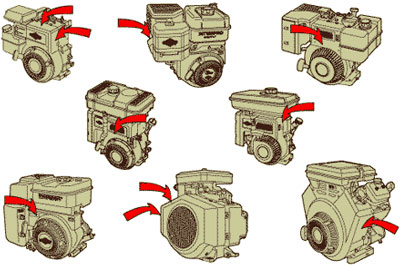
The Age of Briggs & Stratton


A hammering
in the night
even after we'd finished

an arrythmic stroke
neither on the four
nor the one quite,

but pure tinkering,
that is
the ominous rattling

of inner distress
taken for molar
or fingerbone

rather than
design flaw, the mere
wear & tear

properly
natural
to a two-stroke so

innocent of
maintenance
but not sawdust not hardly!

that will accede
to pleadings, piques &
inappopriate invocations,

thus mow the lawn
ten seconds at a time
and curse the earth

with the hammer
as a wrench
or with a wrench

work boulders free
to lay the grid
of mulching pigs

over everything
erasing without squeal
the leafblower's legacy.


 Posted by Picasa

Thursday, August 17, 2006

Mass murder in the skies: was the plot feasible?

"Now for the fun part. Take your hydrogen peroxide, acetone, and sulfuric acid, measure them very carefully, and put them into drinks bottles for convenient smuggling onto a plane. It's all right to mix the peroxide and acetone in one container, so long as it remains cool. Don't forget to bring several frozen gel-packs (preferably in a Styrofoam chiller deceptively marked "perishable foods"), a thermometer, a large beaker, a stirring rod, and a medicine dropper. You're going to need them.

It's best to fly first class and order Champagne. The bucket full of ice water, which the airline ought to supply, might possibly be adequate - especially if you have those cold gel-packs handy to supplement the ice, and the Styrofoam chiller handy for insulation - to get you through the cookery without starting a fire in the lavvie.

Once the plane is over the ocean, very discreetly bring all of your gear into the toilet. You might need to make several trips to avoid drawing attention. Once your kit is in place, put a beaker containing the peroxide / acetone mixture into the ice water bath (Champagne bucket), and start adding the acid, drop by drop, while stirring constantly. Watch the reaction temperature carefully. The mixture will heat, and if it gets too hot, you'll end up with a weak explosive. In fact, if it gets really hot, you'll get a premature explosion possibly sufficient to kill you, but probably no one else.

After a few hours - assuming, by some miracle, that the fumes haven't overcome you or alerted passengers or the flight crew to your activities - you'll have a quantity of TATP with which to carry out your mission. Now all you need to do is dry it for an hour or two..."
Terror: keeping the outrage in perspective


"This is the fantasy that is encouraged by the authorities and their supporters, when they warn of the danger to ‘our way of life’ posed by these little groups of pathetic terrorists. Terrorism can bring down a plane, even 10 planes if the stories of the latest plot are to be believed, or great Twin Towers in the centre of a city. But how could a relative handful of bombers bring down a civilisation or a way of life? Even if they kill 3,000, as on 9/11, or more than that, as the hysterics claim would have happened this time, they are simply throwing snowballs at castles. Despite the rhetorical links with the Second World War that we hear being made all the time, there is no realistic comparison between the threat posed by the lightweight foot-soldiers of Islamic terrorism today and that represented by an enemy power such as Nazi Germany.

Islamic terrorism is real. But the notion of an Islamic terrorist threat to society is the product of our own insecure imaginations. It is a symptom of a society that has lost its way, lost a sense of certainty about itself, and feels unusually vulnerable..."

Wednesday, August 16, 2006

The UK Terror plot: what's really going on?


"So this, I believe, is the true story.

None of the alleged terrorists had made a bomb. None had bought a plane ticket. Many did not even have passports, which given the efficiency of the UK Passport Agency would mean they couldn't be a plane bomber for quite some time.

In the absence of bombs and airline tickets, and in many cases passports, it could be pretty difficult to convince a jury beyond reasonable doubt that individuals intended to go through with suicide bombings, whatever rash stuff they may have bragged in internet chat rooms.

What is more, many of those arrested had been under surveillance for over a year - like thousands of other British Muslims. And not just Muslims. Like me. Nothing from that surveillance had indicated the need for early arrests.

Then an interrogation in Pakistan revealed the details of this amazing plot to blow up multiple planes - which, rather extraordinarily, had not turned up in a year of surveillance. Of course, the interrogators of the Pakistani dictator have their ways of making people sing like canaries. As I witnessed in Uzbekistan, you can get the most extraordinary information this way. Trouble is it always tends to give the interrogators all they might want, and more, in a desperate effort to stop or avert torture. What it doesn't give is the truth...

We then have the extraordinary question of Bush and Blair discussing the possible arrests over the weekend. Why? I think the answer to that is plain. Both in desperate domestic political trouble, they longed for "Another 9/11". The intelligence from Pakistan, however dodgy, gave them a new 9/11 they could sell to the media. The media has bought, wholesale, all the rubbish they have been shovelled..."

Monday, August 14, 2006


good article on How (and Why) to Read Francis Parkman


"However grand the scope of his vision, and however confident his moral center, it would have been difficult for Parkman to imagine a time at which the United States would be the only global imperial power. We don't often use the word "empire" these days--"superpower" has displaced it--but since the collapse of the Soviet Union, Americans and American historians have clearly been in search of new narratives, new frameworks, to make sense of our rapidly changing world. No longer does it seem acceptable to offer a survey of early American history in which the principal aim is to describe the rise of an independent United States, complete and sufficient unto itself. Parkman's insistence on seeing North America's history as a process of imperial expansion rather than the story of the birth of an American nation has never seemed more apt."


 Posted by Picasa

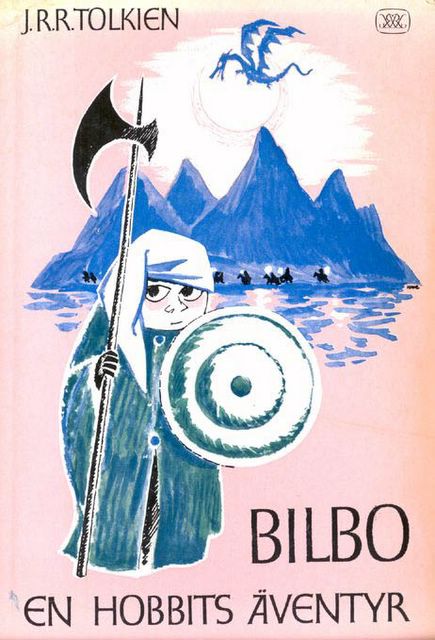
Tove Jansson's "Hobbit" illustrations

via a trove of muumilinks at metafilter....


 Posted by Picasa