Thursday, March 15, 2007


thanks Vanessa for this lovely Indian tree...

Wednesday, March 14, 2007


Spring Training Cramp

after Donato Mancini

spring ingratitude demonstration
settlement mentholated educators
torso somnolent lentil
tiled educated editorial
alcopop operation onset
etherised edema
macerate atelier error
rorschach achieves escape
pending dinner nerves
essentially lyrical calzone
nearly lynched cheddar
arterial alterations onshore
realtor origami amino
minotaur urbanites test stampedes
describe beaver versifiers
ersatz tzigane ganesha
shambolic licentious usual
already dynastic stickle
tickles lest established
shed-dweller eradication
onetime mephisto historian
angioplastic ice-scraper
perennial altoid idolater
lateran ranch hand
adipose suture tureen

story of the Eye--

"The fish Bathylychnops exilis has four eyes: one set to look up, and one set to look down; but at what? Nobody knows. The surface-feeding fish Anableps anableps can see clearly both in and out of the water. Mantis shrimps use polarised light to swap messages that no other animal can see. Even a kilometre below the sea’s surface there is, incredibly, still plenty of material my story could have drawn on, if only there were room. Bioluminescent photophores tattoo the sides of lanternfish, fang-toothed fish dangle lures baited with light-making bacteria, and one deep-water fish, Aristostomias, communicates with others by generating pulses of red light – a colour no other neighbouring species can see..."
Bush heart Chomsky

"To Bush, like Chomsky, the United States and Iran are locked in a zero-sum struggle for control over oil. To Bush, like Chomsky, rolling back Iranian influence in its neighborhood are vital to American national security and economic prosperity. To Bush, like Chomsky, America is all-powerful and can easily succeed at swatting back the Iranian fly. To Bush, like Chomsky, Bush is a clever and brilliant leader full of subtle and cunning schemes to manipulate events inside Iran. To Bush, like Chomsky, Bush's policies are continuous with those employed by past presidents to render the United States the richest and most powerful nation on earth. And so on..."


acquired yesterday the first edition of the excellent Yukon Places and Names by R. Coutts. Books like this, William S. Powell's "North Carolina Gazeteer" & Walbran's "West Coast Place Names" are great places to get a feel for a place's history while aimlessly browsing (nice to know, for example, that a river named for Charles Babbage flows into the Beaufort Sea)...

"When first prospecting in the southeast Yukon and Cassiar country, I was naturally interested in the history of an area about which I had read and been told so much. Becoming curious about the origin or meaning of a Yukon place name, I found that there was often no answer, or conflicting ones. Alone of Canada’s provinces and territories almost nothing has been written on this subject. On reading the early literature it often appeared that the modern name was not that given originally and that in many cases the name and its meaning had been altered or changed. I began to search for the true origins of these names. Gradually, the people and the stories behind the names began to live for me and many were more interesting than much of the fiction written about the territory. As the stories unfolded and extended, my interest became more serious but no less enjoyable. Many newly learned facts revealed other stories and puzzles to be traced and solved..."

Tuesday, March 13, 2007


Nanaimo trees


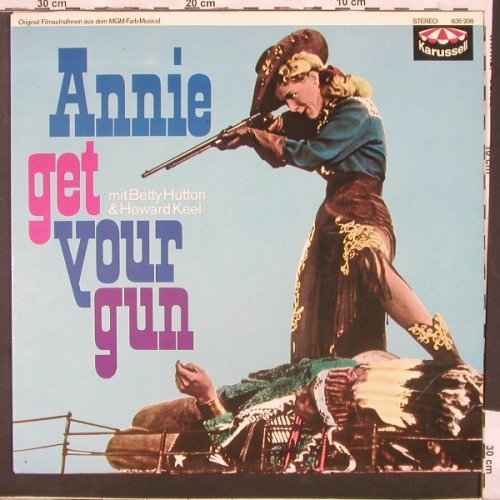
farewell Betty Hutton--

to paraphrase James Ellroy on Buddy Greco, she didn't just sell a song, she drove over to your house and installed it...When big fan Bjork covered (and channelled) Hutton so succesfully in her "It's Oh So Quiet" video she seemed a natural for an "Annie Get Your Gun" remake (Altman maybe??), but then along came Lars Von Trier, who stuck her in the worst musical ever made & the last one she would ever do, unless you count those Matthew Barney vaseline pours, which I don't...

Monday, March 12, 2007

fine defense of 24

"With all the earnest hand wringing over the 24's absurd torture scenes, military spin-doctors must have seen an opportunity to turn 24 into the scapegoat for Guantanomo Bay et al.

But did they really just admit that soldiers couldn't separate TV from reality? Do they want to be advertising this to the American public? After all, they are putting weapons in the hands of people who need TV dramas to carry the disclaimer, "Don't try this at home...""


Five miles out of London on the Western Avenue...

must have been a wonder when it was brand new...


(via I like)

Sunday, March 11, 2007


new piece on essayist George W.S. Trow, who died in Naples last year...
Critical Mess in Seattle...

"I don't ask for [art], and I don't expect it," Kangas said. "I do have an art collection, artists have made gifts of work to me over the years, that is true. But that has been their decision, not mine.... I'm sorry if they were unhappy with what I might have written about them. I'm sorry if they are upset or if they feel the need to fabricate conversations. I've been here a long time; I'm a big target."

Wednesday, March 07, 2007


Stockett/Stark's Crossing/Beaver pond trees

Tuesday, March 06, 2007


Vancouver and ferry trees

Sunday, March 04, 2007


March of the Penguins: acquired four early volumes of Nikolaus Pevsner's rarely-encountered-by-me "Buildings of England" series begun in 1951, printed on crumbly bad paper (except for the copious illustrations) but sturdily sewn in signatures--little chads should be able to fall from them for years to come.

Tuesday, February 27, 2007

Six and Two

"Sports metaphors capture the attitude that led us to where we are today. When the Bush White House, desperate but unserious, declares that "failure is not an option," theirs is the certainty of a football coach exhorting his players at halftime when they're down 28 points. At the end, unthinkable as it may be, the privilege of being the United States -- as opposed to, say, Russia or Germany -- is that we can lose wars, put them in the record books and move on.

But if losing the war is not quite the existential crisis that the advocates of escalation make it seem, it is also not as casual as the sports-score attitude that led us into it suggests. The years following the Iraq loss will be no easier than the decade after the loss in Vietnam. And the problems won't be confined to the war's aftermath. There will be the consequences of our fiscal irresponsibility, a deepening energy crisis, climate change, and the social fissures created by wide inequality and middle-class insecurity..."


South Wellington trees


& speaking of New Star, my stablemate Donato Mancini's wonderful Ligatures just got reviewed on Amazon by the mighty Kevin Killian--

"This book had me standing up several times a day, so the book fell off my lap as my "lap" went away. The book, all dented now, remains a monument to the imagination, the strength of alphabet, as ivy and fluid, the way we keep making sense out of the insensible..."

Monday, February 26, 2007


thanks to RM of New Star for these scans of a handsome and rare illustrated bible produced by the Modern Library in 1943 for the booming wartime trade & not, I think, reprinted. The photo of it nestled with its fellow stout "illustrateds" is from an impressive site dedicated to the happy pursuit of Modern Library Collecting...


anticipating a big MOMA show, pieces on Jeff Wall in the New York Times--

"“Believing in the specialness of what you are photographing is a disaster,” he said. “Then you think the photograph will be good because of what is in it. Cézanne taught me that that is not true. An apple is not very interesting. He expunged any attachment to the subject matter, except what he brought to it. In the painting he would bring it back to life. Only by believing that his painting it is what would enliven it could he make it happen.”"

and the New Yorker

"It may be enough to know that, in theory-drunk circles of the period, any sort of aesthetic appeal could be regarded as a stratagem of “late capitalist” ideology or some other wrinkle of malign social power. (The enemy’s identity was never entirely clear.) Artists were obliged to signal knowingness on this score. If critical paranoia poisoned visual and imaginative pleasure, that was unavoidable: a toll of enlightened consciousness. A lot of preachily condescending work resulted, and Wall was not exempt. But a certain quotient of unauthorized excitement, in “wow” effects of what amounts to single-frame cinematography, always set him a bit apart, as did a restlessly experimental drive..."

Sunday, February 25, 2007


From a fine set of images taken on the Fraser River by young Tsawassen photographer Sam Cummings.


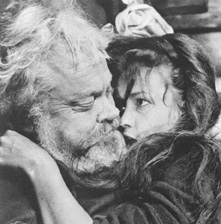
good omnibus review of books on Orson Welles--

"Welles was younger than the Surrealists, but jump-starting his career as he did—he was a professional stage actor by sixteen, in 1931—he came of age at roughly the same time as artists who were ten or so years older than he was. And like Dalì, whose best paintings spring from the spooky seacoast terrain he identified with his boyhood, or Joseph Cornell, whose boxes are so many little monuments to bygone charms, he was excited by the taste for optical tricks of the pre-modern, late-Victorian world of his parents' time, the era he had just missed. In Citizen Kane and The Magnificent Ambersons, with their sensuous, breathing sense of an earlier America, Welles has much in common with Dalì and Cornell in the way his subjects are both the past in itself and the filtered, circuitous way it is remembered. As with the two artists' work (and less sentimentally than most American filmmakers express it), these Welles movies suggest that all one's experience is tinged by the expectations and losses of childhood..."