Wednesday, June 16, 2010


what was Henry Roth up to?
In Mercy of a Rude Stream he quotes more than once a Talmudic saying to the effect that you are not required to finish, but you are not allowed to stop, either. Life, unlike fiction, has neither crisp beginnings nor redemptive endings. It endures, as Roth did, until it doesn't...

Tuesday, June 15, 2010

The Green Apple Core: Poem of the Week by Laura Moriarty
8. The Imaginary Community
Real as thought
When thought
Plain as paint or
Audible sings
In tones that

In times which
These darknesses
Seem light
As among beings
Or notes between them
When us means both
Many letters
Between us
This commerce
As fast as light
Sets the tone
Webern's Bagatelles
The dark light again
As with yourself
Though (I am) not there with
But aware of (you) on
The edges of everything
To be read as if
Our lives depended upon
Knowing there is one
Are ones who know
YouTube - Anton Webern: Six Bagatelles for String Quartet, Op. 9 (1911-13)
Monday, June 14, 2010


Isola di Rifiuti: Dorn / Prynne
It is quiet out there now—the taste of dog
raised on Friskies, a revolutionary food,
a predator’s windfall—the Spam of concocted dogs,
the moral equivalent of chicken soup. But
a dog like that is rarely let out, therefore
such an encounter is deep in the books.
Verisimilitude rules the Dog world. The scent of dog
permeates the cabin, Old Smokers, off the weed for years,
take it in, the original southern, State Narcotic.
Too big to ban: too bad to smoke.
Sunday, June 13, 2010
 fine essay on Paul Verhoeven's prophetic Starship Troopers --
When some brave soldiers capture the “brain bug” at the end, it’s a
hollow triumph, because it’s a senseless war they’re biologically and
militarily doomed to lose. For the suckers going for citizenship, their
greatest hope is to sacrifice a limb or two, and get back home;
otherwise, the best and the brightest can expect the high honor of being
ceremonially jettisoned into the vast nothingness of outer space...
Saturday, June 12, 2010



Friday, June 11, 2010
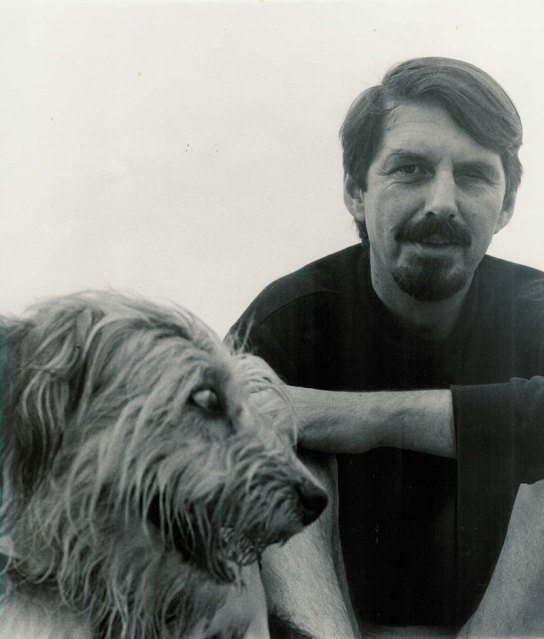
Robert Creeley's Autobiography
I can watch, from this window, an insistent height of sky that has been
all this past fall and winter a companion to my being here, and a
subtle, unaggressive information of where, in fact, it is. It's as if I
can't really see ground, but rather, the tops of birches, planted in the
back common ground of this large apartment block, which are on eye
level. One could reach out, with sufficiently long arms, and pick off twigs from their crowns. Elsewise I look across at the other apartment
windows, which are of regular dimensions, set and abstracting, in the flat yellowish-brown stucco. Above there are details of brickwork, the
point where an edge of roof meets another. There are galvanized tin roofs, one painted a barn red, another black, both common colors of
industrial cover paints. And the sky is another thing entirely, persistently, though it is within a set frame, the window, a place, simply up there. It isn't only its being far, or indeterminant, or just
this shifting, massive place of light and weather. It is that it proposes no human convenience, that it isn't simple, that it won't go away. Thus I love Ginsberg's line in Kaddish, "And the sky above, an old blue place."
(thanks DS)






Friday, June 04, 2010

I'll be appearing on Saturday night at the Charles Olson Centenary Conference--looking forward to seeing everyone!





Thursday, June 03, 2010

Alan Davies on The Dea(r)th of Poetry
There is always another (another (always another)) excuse for being nice.
That (that) in-and-of-itself should tell us something (that in and of itself should tell us something).


Wednesday, June 02, 2010
“America” is a smug, hardhearted, unforgiving nation of jackals, which
forever slaps itself on its back over how generous, selfless and idealistic it is. It is the most preposterous propaganda barrage since
Goebbels ran an office, in bloodier and more interesting times.
You go to the window. You look out at the immense night. You see the plow, you see the dipper, you see the fish and you see the net. Every thing blood and bone ever needed is shown and displayed in the sky. You can hunker down and pay the mortgage, and save yourself a lot of trouble, or you can see the show. There actually isn’t any other choice.
For a mere traveller has no access to the haunts...

Edward Dorn: The Air of June SingsMy eyes avoid
the largest
stone, larger than the common large, Goodpole Matthews,Pioneer, and
that pioneer sticks in me like a wormed black cherryin my throat,
No Date, nothing but that zeal, that trekkingand Business, that
presumption in a sacred place, where childrenare buried, and
where peace, as it is in the fields and the countryshould reign. A
wagon wheel is buried there. Lead me away
to the small
quiet stones of the unpreposterous dead and leaveme my tears for Darling we love thee, for
Budded on earth and blossomedin heaven, where the fieldbirds sing in the
fence rows,and there is possibility, where there are not the loneliest of
all.
Oh, the stones
not yet cut...
Tuesday, June 01, 2010
 David Thomson on Dennis Hopper: Dead, Man
 Frank Booth is one of those characters from the '80s, like Jack Torrance
and Hannibal Lecter, who showed how monsters were settling into
ordinary life....
Monday, May 31, 2010

"The Thing"
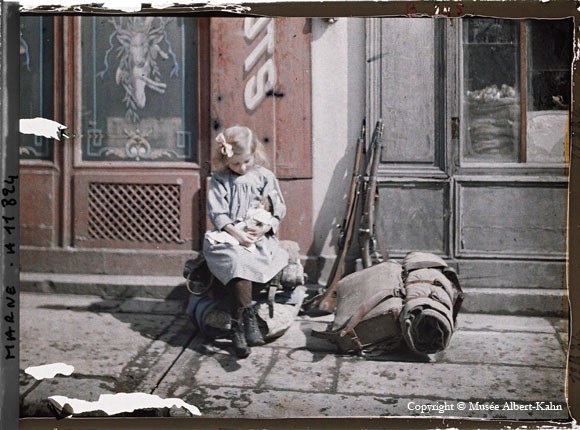
LUIS HERNANDEZ from the State of Veracruz works in demolition in New York. He sends home $200 a week.
LUIS HERNANDEZ originario de Estado de Veracruz trabaja como demoledor en Nueva York. Manda 200 dólares a la semana.

two classic albums by John Fahey, including "Railroad I":--
In 1983 he recorded Railroad I for his Takoma label: a 10-song album with titles a mixture of Richard Brautigan's porch-side mysticism and
folky small-talk with a grizzled convenience store clerk. Some sound like ad hoc itineraries: “Frisco Leaving Birmingham,” “Afternoon Espee
through Salem.” Others are lent an ambiguous personal symbolism or naïve simile: “Summer Cat by My Door,” “Life Is Like a Mountain Railway” (“I ask you, is it?” Fahey mused in his liners). There’s the rail fan’s favorite: “Steve Talbot on the Keddie Wey,” a locomotive picker rhapsodizing the steel tracks laid along the Feather River Canyon.
There’s the conflation of the ineffable and the empirical: “Enigmas & Perplexities of the Norfolk and Western;” “Delta Dog thru the Book of
Revelation.” There are meditations and ruminations, vignettes and moderate and capable extrapolations of worn and ossified themes. There
are whimsical and worried tones; there are deep death tolls and ecstatic birth cries. And there is no clear statement about anything. True to
his word, Railroad I is a puzzle askew--scattershot, a colorful and emotive mess, bereft of configuration and purpose...

 Leslie Scalapino 1944-2010