Sunday, December 03, 2006


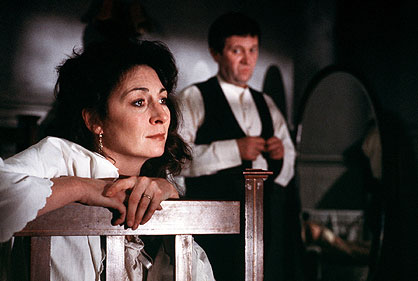
Hiroshi Teshigahara's The Face of Another a film I've been trying to see for years, on TCM at 2300 PST tonight....

Friday, December 01, 2006

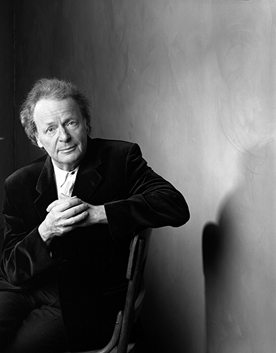
Interviewing the man behind "The Wire"

"Slate: If you had to sum up what The Wire is about, what would it be?

Simon: Thematically, it's about the very simple idea that, in this Postmodern world of ours, human beings—all of us—are worth less. We're worth less every day, despite the fact that some of us are achieving more and more. It's the triumph of capitalism.

Slate: How so?

Simon: Whether you're a corner boy in West Baltimore, or a cop who knows his beat, or an Eastern European brought here for sex, your life is worth less. It's the triumph of capitalism over human value. This country has embraced the idea that this is a viable domestic policy. It is. It's viable for the few. But I don't live in Westwood, L.A., or on the Upper West Side of New York. I live in Baltimore..."

Thursday, November 30, 2006


The Deep Funk of Mount St. Helens's "Drumbeat"

"The current eruption of Washington State's Mount St. Helens, which began about two years ago, has been marked by a series of weak, shallow earthquakes, or "drumbeats," that occur every couple of minutes, a new study says.

The "slip/stick" motion of the rocky "plug" being pushed out of the volcano is causing those rhythmic quakes, according to scientists from the Cascades Volcano Observatory in Vancouver, Washington..."

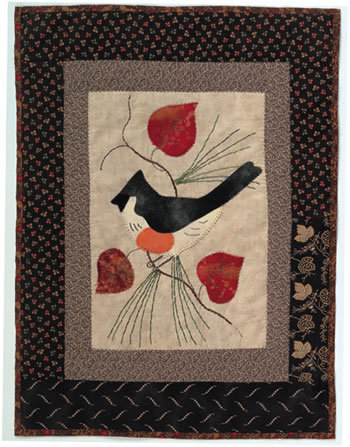
Chickadee and Titmouse History


At the moment
of the lunge,
the black-and-white
striping
of the head
brought her into
abrupt and
conspicuous
view of the observer
peering into
the cavity--
reinforcing
the surprise effect
of the sounds produced.

*

on June 9, 1935
go down
a little squirrel hole
underneath
a dead pine stub
in a little clearing

of these the kinglets are

when the emotion of spring
is no longer controllable

when the birds are obscured
by the falling snow

*

he is omnipresent,
even in the heart of the city

{Brownsville}

on the inside
of the left mandible
of the Sulphur-bottom
Whale skeleton
under the shed

so he worked
around my ear

feel him snip snip
as he severed them

like the whistle
of a man calling his dog

he is omnipresent,
even in the heart of the city

{Brownsville}

*

the heavy, dark forests

{Kirkland}

on bending branches,
vent squeaks
and low chirps,
varied with buzzing
'dizzes'

pairs thus continue
up the forest-clothed flanks

of slopes and cliffs

only the blue jay
refuses to make way

brown above
and plain gray

{Kirkland}

the heavy, dark forests

sharp filletting of Hitchens--

"Discussing the reasons why Burke, who had supported the revolution in America, should have been so hostile to the revolution in France, even in its earliest and most innocent phase, Hitchens remarks that ‘it is a deformity in some “radicals”’ – he has Marx particularly in mind – ‘to imagine that, once they have found the lowest or meanest motive for an action or for a person, they have correctly identified the authentic or “real” one.’ Quite right too; and if any radical, misled by George Galloway’s description of Hitchens as ‘a drink-soaked former Trotskyite popinjay’, should suggest that this book was written out of vanity, he would surely be mistaken. A vain man would have taken care to write a better book than this: more original, more accurate, less damaging to his own estimation of himself, less somniferously inert. The press release accompanying the book led me to expect something much livelier; Hitchens, it exclaims, ‘marvels’ at the forethought of Rights of Man, and ‘revels’ in its contentiousness. There is a bit of marvelling and revelling here and there, but it is as routine as everything else in this book, which reads like the work of a tired man..."
Thomas Pynchon and the myth of invisibility

"Money speaks, the land listens, where the Anarchist skulked, where the horse-thief plied his trade, we fishers of Americans will cast our nets of perfect ten acre mesh, levelled and varmint-proofed, ready to build on. Where alien mockers and jackers went creeping after their miserable communistic dreams . . . we, gazing out over their little vacation bungalows, will dwell in top-dollar palazzos . . . when all is festival and wholesome sport and eugenically chosen stock, who will be left anymore to remember the jabbering Union scum?"

Wednesday, November 29, 2006

Unmentionable lessons of the midterm aftermath

"The relevance of Third Reich Germany to today's America is not that Bush equals Hitler or that the United States government is a death machine. It's that it provides a rather spectacular example of the insidious process by which decent people come to regard the unthinkable as not only thinkable but doable, justifiable. Of the way freethinkers and speakers become compliant and self-censoring. Of the mechanism by which moral or humanistic categories are converted into bureaucratic ones. And finally, of the willingness with which we hand control over to the state and convince ourselves that we are the masters of our destiny..."

Tuesday, November 28, 2006


Abandoned Shopping Carts

"Everyday throughout Los Angeles thousands of shopping carts are ditched in neighborhoods and dumped in back alley’s, used and abandoned. Serving as a key element in our commerce driven society, they act as a modern day pack-mules carrying goods down the aisles of stores and across large parking lots to waiting cars. For those shoppers without transport, these carts often make the slow journey home only to be cast aside after reaching their driver’s destination.

To Combat what has been deemed a public nuisance, the city has passed numerous laws making it illegal to be in possession of a shopping cart in public and will fine businesses for allowing customers to repeatedly make-off with them. In accordance, carts have been equipped with all manners of wheel-locking devices and some markets attach tall poles so as to not let them out the door, yet many still escape. As a last resort, contractors are hired to scour the neighborhood in search of stolen pushcarts, which are then sold back to their respective establishments to wait for the next customer and possibly the start of another strange odyssey."

Chickadee History


Enlivener
of our winter woods.

*

The chika is,
as a rule, two tones
higher than the dees,
and the pitch is
B on the chika and
G on the dees, in the
next to highest octave
on the piano.

*

They made aiming
almost impossible,
for every time I raised
the rifle, one or two
birds would perch
on the barrel
completely hiding
the sights.

*

'Any old
side up
without
care'

*

Blind man's bluff
and hide and seek,
and tag

when
staged in three dimensions

a labyrinth of
interlacing branches for

hazard

and swinging
underneath, caught
each end of the caterpillar

with a foot
so held it
fast

within a few feet
of its apple-branch door

calling Hear, hear me,
with only a breathing space
between repetitions

caught by a cat
at Belvidire, N.J.,
on December 24, 1932

I wrapped the offending
rag around the branch

the tail moves, the expanding
wings shoot out sideways
and strike the
surrounding wood
inside the cavity
and as the head comes
stiffly down the bird
emits a strong
hiss or puff
strikingly like that
of the copperhead.

Monday, November 27, 2006


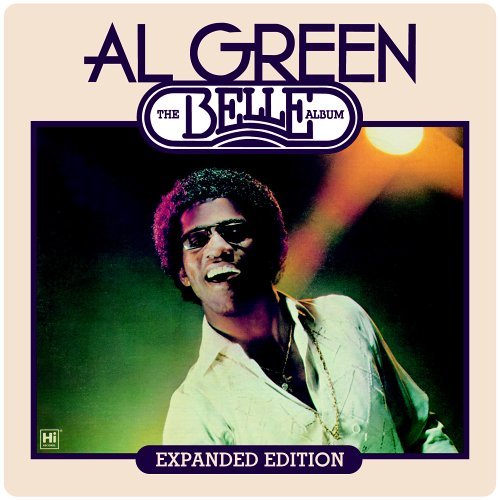
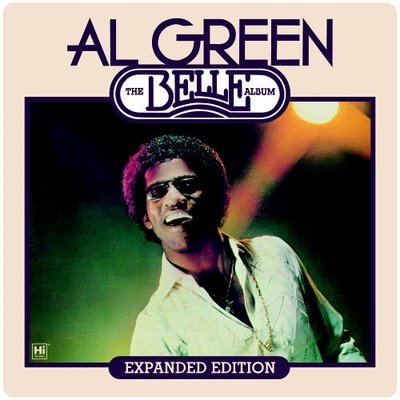
Welcome Belle Roxy Shier!!
born yesterday...


1607 John Harvard England, clergyman/scholar, major benefactor to Harvard University (library & half his estate)
1731 William Cowper England, preromantic poet (The Task)
1792 Sarah Moore Grimk‚ American antislavery, women's rights advocate
1832 Mary Edwards Walker US, doctor/women's rights leader
1857 Ferdinand de Saussure Switzerland, linguist (Cours de Laguistique Generale)
1876 Willis Haviland Carrier developed air-conditioning equipment
1892 Joe Guyon NFL halfback (Canton, Cleveland, Oorang, Rock I, etc)
1894 Norbert Wiener US, mathematician/discovered cybernetics
19-- Elizabeth Savage Pittsburgh PA, actress (Gwyneth-Loving)
1902 Alberto Morin PR, actor (Armando-Dallas)
1905 Emlyn Williams Wales, actor/playwright (David Copperfield)
1907 Frances Dee US actress (Of Human Bondage)
1910 Cyril Cusack South Africa, actress (Day of the Jackal)
1912 Eric Sevareid Velva ND, newscaster (CBS Weekend News)
1912 Eugene Ionesco France, dramatist (Rhinoceros)
1913 Foy Draper US, relay runner (Olympic-gold-1936)
1915 Earl Wild Pittsburgh PA, pianist (Caesar's Hour, NBC Symphony 1942)
1922 Adele Jergens Brooklyn NY, actress (Dark Past, Fuller Brush Man)
1922 Charles M Schulz cartoonist (Peanuts)
1924 George Segal NY, sculptor lifelike mixed-media figures (Bus Driver)
1925 Eugene Istomin NYC, pianist (Leventritt Award-1943)
1925 Linda Hunt Morriston NJ, actress (Bostonians, Eleni, Silverado)
1927 John Carter Center Ridge Ark, actor (Max-Falcon Crest)
1929 Betta St John Hawthorne CA, actress (Corridors of Blood)
1931 Adolfo Perez Esquivel Buenos Argentina, (1980 Nobel Peace Prize)
1931 Giuliana Chenal-Minuzzo Italy, downhill skier (Olympic-bronze-1952)
1933 Robert Goulet Lawrence MA, singer/actor (Camelot, Naked Gun 2«)
1934 Ludmila Shevtsova USSR, 800m runner (Olympic-gold-1960)
1935 Marian Mercer Akron Ohio, actress/singer (Dean Martin Show)
1937 Boris Yegorov cosmonaut (Voskhod 1)
1937 Leo Lacroix France, skier (Olympic-silver-1964)
1938 Rich Little Ottawa Canada, impressionist/actor (Love on a Rooftop)
1938 Tina Turner [Anna Mae Bullock], Brownsville TX, singer (Proud Mary)
1942 Olivia Cole Memphis TN, actress (Roots, Szysznyk)
1943 Jan Stenerud Norway, NFL place kicker (Kansas City Chiefs)
1945 John McVie rocker (Fleetwood Mac-Rumours, Tusk)
1945 Mikhail Woronin USSR, gymnast (Olympic-2 gold/4 silver/bronze-1968)
1948 Galina Prozumenschikova USSR, 200m backstroke (Olympic-gold-1964)
1952 Wendy Turnbell Australia, tennis player (1979,82 US Opens Double)
1959 Jamie Rose NYC, actress (Susan Birch-St Elsewhere, Falcon Crest)
1961 Marcy Walker actress (All My Children, Eden-Santa Barbara)
1963 Allyson Rice-Taylor actress (Connor-As the World Turns)
1981 Jamie Fiske liver transplant recipient


nice appreciation of pianist Anton Kuerti's Beethoven Box--we saw him in Nanaimo in 1999, confirmed by ticket folded & tucked behind the Diabellis--

"Anton Kuerti’s set of Beethoven’s piano sonatas on the Analekta label is far and away the most interesting and thought provoking I’ve heard. My respect for his playing, my awe and delight, continue to grow each time I listen. Kuerti has obviously thought long and hard about these sonatas. The performances are never rote, never tired, often strikingly original. In a previous review (of a Brahms sonata), I likened Mr Kuerti to an explorer or adventurer, with an eye for discovery. Although some of the sonatas are played in a “traditional” manner, many (perhaps most) are not, employing an unusually slow tempo, or an unexpected delicacy and finesse, or the slightest hint of rubato, quite unprecedented in my experience. Not that Mr Kuerti is shy of the traditional sturm und drang approach to Beethoven. (The Diabelli Variations, included with the set, is an absolute hair-raiser.) The pianism throughout is marvelous, strong and sure. I love the originality, the intelligence, and I especially love the voicing. Kuerti gives the left-hand articulateness, nuance and clarity that put it on an equal footing with the right hand. This not just unusual, it is revelatory. At times one partakes of a sort of marvelous dialogue between the hands. There is never a moment of doubt, either about the pianist’s certainty or his musicianship. This is the big league, brilliant technique combined with intelligence and original insight..."

guess it's time to bust out that old Manse favorite, John Greenleaf Whittier's Snow-Bound--

"Shut in from all the world without,
We sat the clean-winged hearth about,
Content to let the north-wind roar
In baffled rage at pane and door,
While the red logs before us beat
The frost-line back with tropic heat;
And ever, when a louder blast
Shook beam and rafter as it passed,
The merrier up its roaring draught
The great throat of the chimney laughed;
The house-dog on his paws outspread
Laid to the fire his drowsy head,
The cat's dark silhouette on the wall
A couchant tiger's seemed to fall;
And, for the winter fireside meet,
Between the andirons' straddling feet,
The mug of cider simmered slow,
The apples sputtered in a row,
And, close at hand, the basket stood
With nuts from brown October's wood..."

(can, in emergencies, be sung to the tune of Snowbound by DONALD FAGEN)

a conservative surveys the wreckage--Good-bye to All That--

"Convinced that history at some point took a wrong turn, they pore over ancient texts in search of some Hermetic insight into the fatal error. (Not surprisingly, this approach has little popular appeal, although it still commands respect among professional conservatives.) The notion of a crisis of the West, however, grossly overestimates the importance of ideas; indeed, it requires an unphilosophical and almost paranoid ability to treat ideologies (most conspicuously, liberalism) as living, breathing omnipresences to which intentions, tactics, strategies, feelings, disappointments, and conflicts can all be attributed. Believers in the crisis of the West rest almost their entire worldview on an elusive notion—modernity—borrowed from a half-formed science—sociology. Crisis-of-the-West conservatism, at one time a fruitful response to the calamities of the 20th century, has become more a posture than a genuine school of thought.

Another group pleads for the conservative movement to return to its alleged first principles. “If only people would still read Russell Kirk,” one hears. But the movement never had any first principles to begin with. Although it boasts a carefully husbanded canon of supposedly foundational texts, the men who wrote them—Kirk, Strauss, Voegelin, Weaver, Chambers, Meyer—were notorious eccentrics given to extravagant claims whose policy implications remain largely obscure. Russell Kirk, for example, even as he shrewdly positioned himself as the intellectual godfather of the conservative movement, had almost no political opinions whatsoever.

Still others eulogize local attachments and ancestral loyalties. They invoke a litany of examples: family, church, kin, community, school, the “little platoons” in which Burke found the basis of political association. Celebrating such “infra-political” institutions may well have made sense in the 1950s, the high tide of American nationalism and federal government prestige. At most other times, however, ancestral attachments are dangerously subversive. The U.S. could not have survived had it not ruthlessly extirpated the ancestral loyalties of both natives and newcomers; Great Britain suffered endless civil wars before the great constitutional oak that Burke praised took root; the West itself succeeded precisely because it cut short the reach of the extended family or clan. Ancestral loyalties are the curse of uncivilized peoples, most especially in the hypermnesiac Middle East. Most ominously, praise of local attachments now comes in the guise of multiculturalism, perhaps the most insidious threat to a just order today. Not for nothing did communitarianism become a left-wing vogue.

For all their philippics, disgruntled conservatives remain decidedly of the movement, if not in it, for they share with the mainstream the fundamental conceit that conservatism exists to advance some core set of beliefs or principles. Like a soul animating a body, these principles allegedly guide, smooth or grim, all the movement’s institutions, programs, publications, alliances, tactical feints, and shifting positions. Hence, even those outside the mainstream keep the faith that the movement will not stray forever. Conservatism, in this view, can no more betray its principles than the God of Abraham can betray His covenant with Israel.

But “conservatism” has no mystical essence. Rather than a magisterium handed down from apostolic times, it is an ideology whose contours are largely arbitrary and accidental. By ideology, I mean precisely what Orwell depicted in 1984. I do not mean, of course, that conservatism is totalitarian. Taken as prophecy, 1984 has little merit. Taken as a description of the world we actually live in, however, it is indispensable. 1984 reveals not the horrors of the future but the quotidian realities of ideology in mass democracy. Conservatism exemplifies them all..."

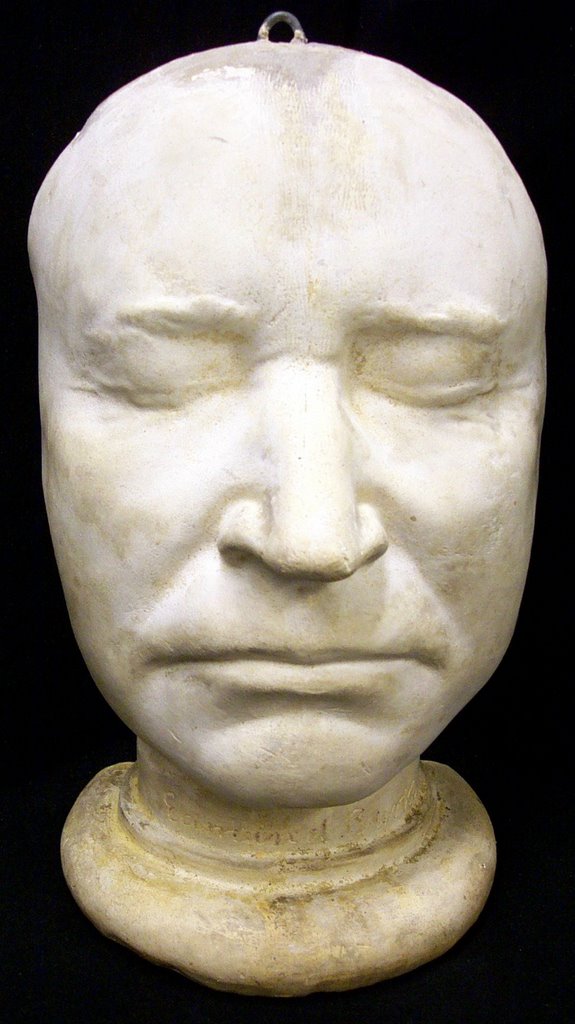
(photo the death mask of Edmund Burke)

Sunday, November 26, 2006


on occasion of the re-issue (and hopfully fast DVD release) of her father's 1987 "The Dead" an interview with Anjelica Houston

Saturday, November 25, 2006


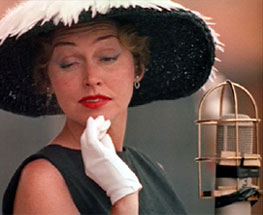
farewell to songbird Anita O'day--this site has clips, including a bit of her wonderful dismantling of "Sweet Georgia Brown"--in white gloves and a big hat, leaving the band way behind--from "Jazz On A Summer's Day"...the end of an era of singing...

Thursday, November 23, 2006


if you can't take a stroll in the wet English fall countryside this afternoon then the new short films "Stort", "Cherry Tree in November Rain" & "Thirteen Minutes in the Garden" at Scenes of Provincial Life are the next best thing--Mr. Szpakowski is the Thomas Bewick of the Quicktime, I think...
Iraq: The War of the Imagination

Information, that is, could slow decision-making; indeed, when it had to do with a bold and risky venture like the Iraq war, information and discussion—an airing, say, of the precise obstacles facing a "democratic transition" conducted with a handful of troops—could paralyze it. If the sober consideration of history and facts stood in the way of bold action then it would be the history and the facts that would be discarded. The risk of doing nothing, the risk, that is, of the status quo, justified acting. Given the grim facts on the ground—the likelihood of a future terrorist attack from the "malignant" Middle East, the impossibility of entirely protecting the country from it—better to embrace the unknown. Better, that is, to act in the cause of "constructive instability"—a wonderfully evocative phrase, which, as Suskind writes, was

"the term used by various senior officials in regard to Iraq—a term with roots in pre-9/11 ideas among neoconservatives about the need for a new, muscular, unbounded American posture; and outgrowths that swiftly took shape after the attacks made everything prior to 9/11 easily relegated to dusty history.

The past—along with old-style deliberations based on cause and effect or on agreed-upon precedents—didn't much matter; nor did those with knowledge and prevailing policy studies, of agreements between nations, or of long-standing arrangements defining the global landscape.
What mattered, by default, was the President's "instinct" to guide America across the fresh, post-9/11 terrain—a style of leadership that could be rendered within tiny, confidential circles.

America, unbound, was duly led by a President, unbound."


It is that "duly led," of course, that is the question. Information, history, and all the other attributes of a deliberative policy may inhibit action but they do so by weighing and calculating risk. Dispensing with them has no consequences only if you accept the proposition that the Iraq war so clearly disproves: that bold action must always make us safer...

Monday, November 20, 2006


on Dec 1 at 2300 PST on TCM don't miss Vincent Price in the very scary & timely Witchfinder General

" Price's witch-finders are allowed to call victims perpetrators and sling them up in the moral vacuum that exists on the ungoverned fringes of this and any civil war (his title implies that he has some marshal commission to do so). Figures who are split off from the wider conflict of the 1642 – aspects again more in keeping with an early Peter Watkins docudrama – filter into the quietism of the film's forest of symbols. Loitering military bands, forgotten human carcasses decaying in the bracken, and other social consequences of the breakdown in systems of authority – starvation, criminal and fatalistically disinherited social order and behaviour – allow Reeves' the chance to execute what Wood called “stunning set pieces of mise-en-scene”. Instead of Hammer or Corman, this fraught moral geography now seems more consistent with Bresson's Lancelot du lac (1974), Nelson's Soldier Blue (1970), and other films of the times where the recreation of military history and it myths seems to have been derived from the unending casual destruction of innocence broadcast nightly from Vietnam. The only supernatural component in Reeves' film is contained within the frightened social imagination of Civil War England and in the rhetoric of the witch-finders. We are closer to Mi Lai and Jonestown than to Elm Street. "

interesting piece on Shakespeare and the Puritans...

"In the simplest terms, without the bawdy world of Falstaff and Prince Hal and of Shakespeare’s jesters, beadles, and gravediggers or the hovering evil of murderous kings, corrupt priests, scheming witches, and ungrateful daughters there would have been nothing for those dissenting Puritans to dissent from. The godly needed the rude, the venal, the vulgar, ignorant, and irreverent and framed their own identity against them. "Puritan" is the word with which the profane mocked the godly, a fact that emerges most clearly in Twelfth Night, where the Bard’s only ostensibly Puritan character takes the stage in the person of Malvolio..."

Sunday, November 19, 2006


Hawk History

for Vanessa Renwick


1. Duck Hawk

Wings half closed now,
he shot down past the north end

of the cliff, described
three successive vertical loop-

the-loops across its face,
turning completely upside down

at the top of each loop,
and roared out over our heads

with the wind rushing through
his wings like ripping canvas.

*

Just above the water
the hawk suddenly
accelerated, tapped

the cormorant lightly
on the back, then
circled easily away,

while the frightened
quarry took refuge
unharmed in the water.

*

At last as one turned
to evade the rush,
the hawk swung over
on its back,
and reaching
up one foot
as it shot by,
caught the swift
in its powerful grasp.


2. Eastern Pigeon Hawk

How closely
they huddled together,
as if seeking mutual
protection,
but he went
right through the flock
and came out
on the other side
with one in each fist.

*

Holding it forward
and downward

in one foot,
it occasionally bent

down its head and
tore off a bit

without slackening
its speed.

*

All the while
the Titlark
was nearing,
if by devious
courses,
a dense
thicket
of alders
into which
it plunged at length,
to be seen no more.


3. Black Pigeon Hawk

He swung on one,
and when the gun cracked

the bird started falling
in a diving, fluttering

flight, appearing
to have a broken wing.

*

The hawk
struck the snipe
squarely in
mid-air,
then quickly
carried it away.

*

Thus the successive
lungings and chasings
were not either one-

sided or haphazard,
but so conducted
that each bird alternately

took the part of pursuer
and pursued, and when
enacting the latter role

gave way at once,
or after the merest pretence
of resistance, to flee

as if for its life, dodging
and twisting; yet it was
prompt enough to rejoin

the other bird at the end
of such a bout, when the
two would rest awhile

on the same stub, perching
only a few feet apart
and facing one another,

perhaps not without
some mutual
distrust.


4. Eastern Sparrow Hawk

The point of the beak
is sunk into
the base of the skull,
and the skull
is torn off
with a swift
forward motion.

*

Then, sometimes
with a precise adjustment

to the force of the wind,
it stops the beating of it wings

and hangs as if suspended
in complete repose and equilibrium,

seeming to move not a hair's breadth
from its position.

*

Perched on dead stumps
by the side of the cottonfields,
flying off from the wires
along the track, hovering above
the bare brown stubble, we see them
again and again, nearly always alone.


5. Desert Sparrow Hawk


The grasshopper is held
much the same
as a child would hold
an ice-cream cone.

*

Flies are
repeatedly rejected,

even if
the bird is hungry.

*

In flight, the sparrow
hawk was silhouetted against
the evening sky

and its extended talons
could plainly be seen
clutching the body

of the little bat,
whose wings appeared
to be folded.