Sunday, February 11, 2007


Site formerly occupied by a 7-11, Nichol St.(Highway 1) & Milton, Nanaimo

The second 7-11 in Nanaimo, opened mid-70's, memorable site of well-lit teenage
hallucinations, later I lived on nearby Hecate. Torn down about five years ago when the alley became a shooting gallery. No sign of development.


finally got around to checking out the fine website for Samuel Greenberg: American Poet


"Samuel Greenberg died of tuberculosis in 1917, at age 23. His childhood was spent in poverty on the Lower East Side of New York City. After leaving school at 14 to begin working, he became ill and spent his final years as a patient in several charity hospitals, where he did most of his writing..."


Early Ghosts

When first I beheld
The sight of self alone,
Here standing upon a floor--
A new sensitive throne--
By dark corners round
I shaded myself, in hope
That some light or people
Would be seen through a grate.
But by the might of pictures
Each sighted object looked
As if my soul was but a fortune--
To its memory, meaning booked.


PDF of Italian & English versions of Jeff Derksen's Transnational Muscle Cars & more...

Saturday, February 10, 2007


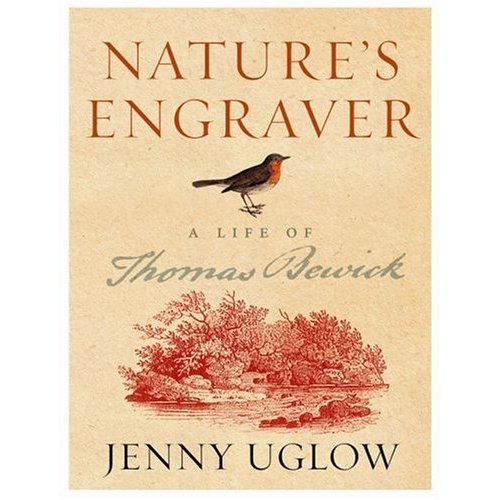
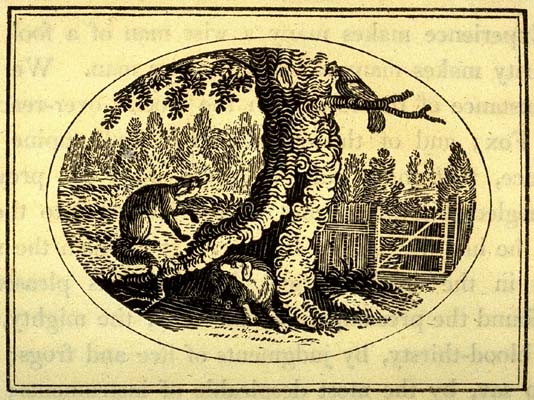
great quote from engraver Thomas Bewick in review of Jenny Uglow's new biography--

"Bewick's aim was to make a personal, durable mark on the world. While out fishing he'd muse on suitable poems that "I would, if I could afford it, have committed to the care of a rock"."

Friday, February 09, 2007

brilliant Joe Klein takedown...

"If you gave the people Joe Klein calls "leftists" a choice -- told them they could have an instant Scandanavian-style state-directed economy, but only if The Sopranos was pulled off the air -- how many of them do you think would vote for even that kind of socialism? The A&E network has nothing to worry about, let's put it that way..."

Wednesday, February 07, 2007

Tuesday, February 06, 2007

Philly poet Frank Sherlock is very ill sans insurance--find out how to help here.


some Poplars, Scotch Elms & a Heron from this wonderful Disappearing Surrey Gallery

(thanks CB)

Monday, February 05, 2007


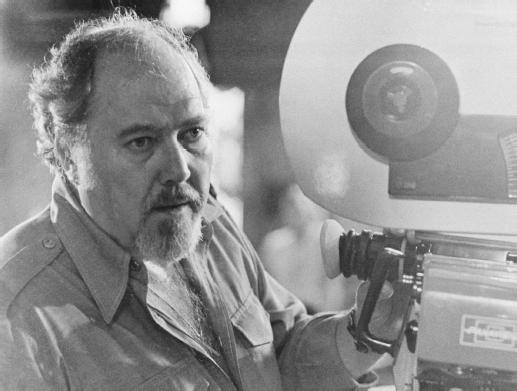
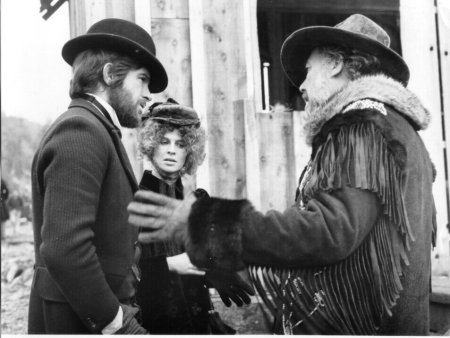
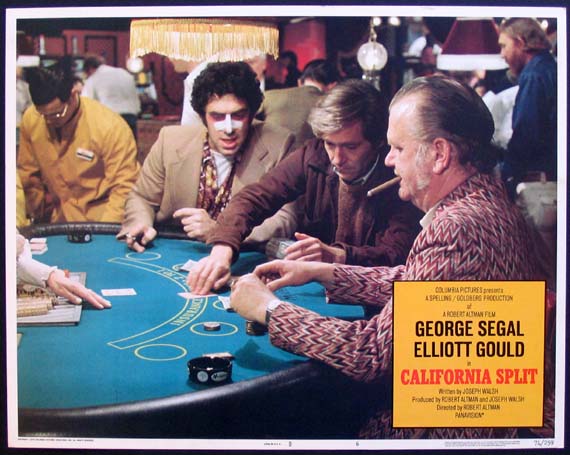
nice Altman obit by "Player" screenwriter Michael Tolkin--

"Some sort of sincerity: Robert Altman was a misanthrope who loved having people around, to watch their behavior. This made him a great host. He should have adapted Poe, he never made a horror film and if I’ve ever been sorry that I didn’t know him better, it’s for this, thinking about it this morning, I would have loved to pitch “The Gold Bug” to him, a story about something meaning something to people, the meaning being more important than the thing. This formula is a bit like his movies or marijuana, and the element that divides those who like his movies from those who don’t, since his movies don’t have the sharp perspectives that always point out the one thing the film wants watched.

I had forgotten how pot works, the way it rearranges the significance of things, the way internal distractions become interesting or threatening paths. It’s not a happy drug at all, it’s not two flutes of nice champagne and a pretty face and perfume in the air. After smoking a little pot with him—and other than one morning in the office he didn’t smoke during the day—some of his methods made sense, and if it was pot sense, the sense is not invalid..."
A Broken Windows Theory Of Tyranny

"The obvious and oft repeated has some truth -- deeply empathic people get their hearts broken young, and learn to "toughen up". Some get toughened into monsters, and some find weird paths to walk between their hardened skin and still soft hearts. If you've read Alice Miller, or any of the people who write about how authoritarian societies "break" children, and encourage this as necessary and important, you've got some idea. Breaking children is the Republican factory, near as I can tell sitting here. You learn that truth is a function of power; and what you feel is a function of what daddy or mommy want you to feel; and then you get 60 more years to untangle it, if you don't turn into a war criminal or vote one into office along the way (or even if you do). But what interested me this morning, and inspired this rant, was not the deeper cause in child rearing, but the effect of a society so cruel and insane that you cannot turn on a TV, or read a paper, or talk to a friend, without some ready evidence of the boot descending on a human face, another fresh example of cruelty and gratuitous control..."

Sunday, February 04, 2007

Saturday, February 03, 2007


from an interesting gathering of legal & literary documents, a lawyerly take on Charles Reznikoff's "Testimony"--

"Every law library in America contains the identical mountain of raw material which Reznikoff taught himself to mine and refine. His work shows all of us who use those libraries something new about the significance of the relics we handle..."

Friday, February 02, 2007


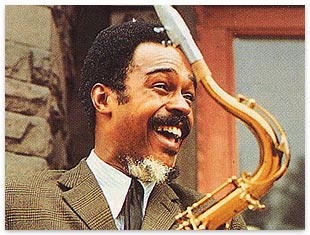
new film on Albert Ayler--

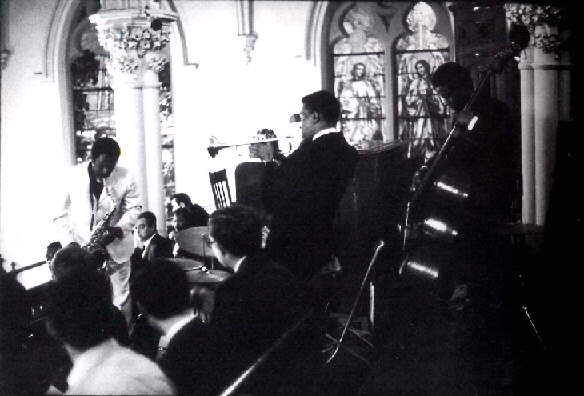
"Ayler saw himself as a jazz missionary, revealing a new improvisational path that didn't depend on the chord-changes of The Great American Songbook, but was more like impulsively painting in sound. His playing often resembled the mixture of exultation and terror expressed by the possessed in religious rituals - and Ayler was definitely a man possessed. One of the most revealing episodes in Collin's documentary occurs in a church: the camera pans across transported faces, with Ayler's impassioned vibrato, banshee-long notes and spine-tingling barks as the soundtrack. Ayler grew up in those churches, and the juxtaposition fits perfectly..."

Thursday, February 01, 2007


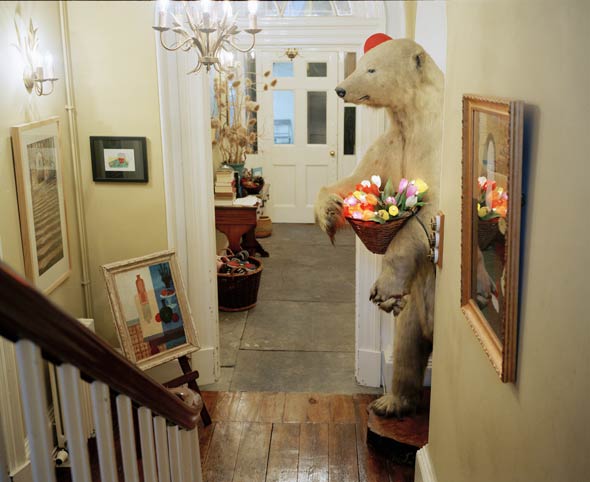
the stuffed polar bear ("Peppy" his name, it turns out) from the Fox's Glacier Mint factory, sold in '73 & now in someone's house, from nanoq, a poignant survey of similar bears in British institutions...

remembering in the "Orient" cinema in Ayr '69-70(a bingo-hall but preserving some of its tatty chinoiserie in '92) the combination of disinfectant and the menthol cloud hovering over the pre-popcorn Scottish crowd ("Shalako", with Connery & Bardot) crunching & chain-sucking their "glassy'er munts" a real head-clearer, like stepping into a cool mountain stream...I used to think about that bear a lot...


South Wellington Trees

Wednesday, January 31, 2007


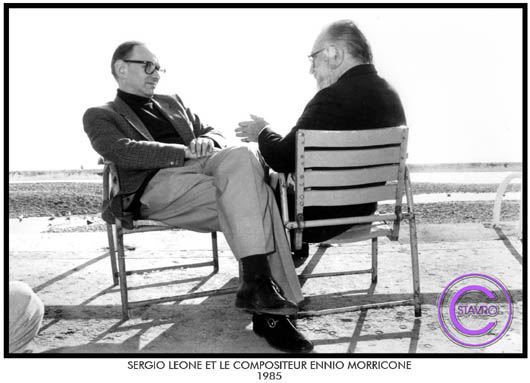
an Oscar for Morricone

"The same recipe had worked, on a majestic scale, with “Once Upon a Time in America,” where the movie’s most plaintive theme was touched off not just by an old man gazing through the window of his boyhood hangout but also by one of his friends, filmed as a kid, scooping cream from a charlotte russe. What ignites Morricone, in other words, is less the nostalgic impulse than those pure, primal experiences which are destined to become the objects of nostalgia—the laying up of treasures upon earth."

Tuesday, January 30, 2007


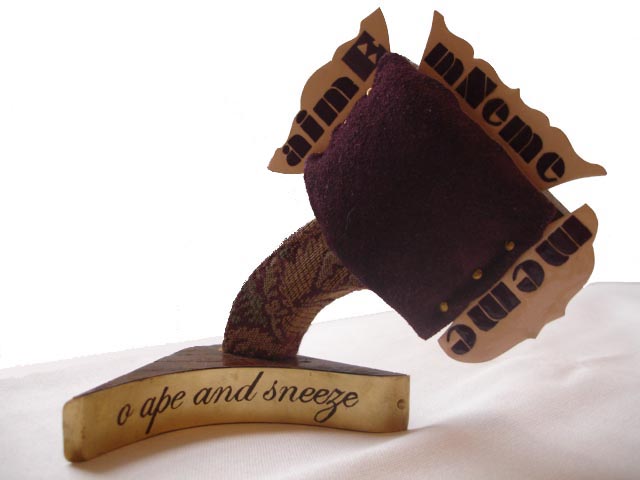
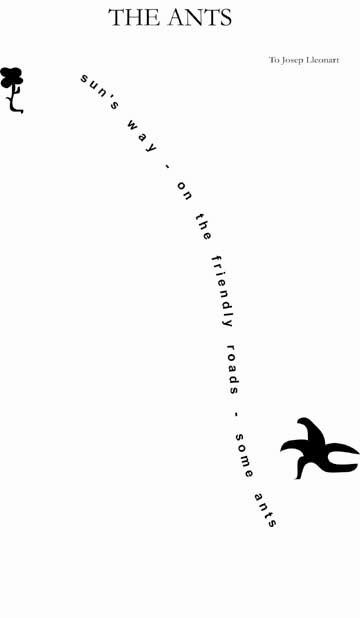
new onedit features (above) Emblems by Thomas Evan & translations by Tim Atkins, poems by Kit Robinson, Leslie Scalapino &c &c....

Monday, January 29, 2007

Is America Afraid of Freedom?

"In the landmark free-press 1971 'Pentagon Papers' case (New York Times Co. v. United States)—in which the Nixon administration demanded severe punishment for the New York Times's having published highly classified information on government conduct (and lies) in the course of the Vietnam War—Justice Hugo Black, writing in the majority, warned of government brandishing 'national security' to silence the press in time of war. 'The guarding of military and diplomatic secrets at the expense of informed representative government provides no real security for our Republic,' Black wrote. 'The Framers of the First Amendment, fully aware of both the need to defend a new nation and the abuses of the English and Colonial governments, sought to give this new society strength and security by providing that freedom of speech, press, religion, and assembly should not be abridged.'
But among the dissenters, Justice Harry Blackmun warned: 'The First Amendment . . . is only one part of an entire Constitution. Article II of the great document vests in the Executive Branch primary power over the conduct of foreign affairs and places in that branch the responsibility for the Nation's safety . . . I cannot subscribe to a doctrine of unlimited absolutism for the First Amendment . . .

'If damage has been done . . . and these newspapers continue to publish the critical documents and there results the death of soldiers [and] the prolongation of the war . . . then the Nation's people will know where the responsibility for these sad consequences rests.'

As George W. Bush continues to act, and believe, in the 'inherent power' of the commander-in-chief, the John Roberts Supreme Court will, in time, decide whether Hugo Black's understanding of the First Amendment prevails or whether Harry Blackmun, Alberto Gonzales, and Commander Bush speak for the nation as the press becomes strictly controlled for a long time to come..."
good Gary Wills in NYT--At Ease, Mr. President

"When Abraham Lincoln took actions based on military considerations, he gave himself the proper title, “commander in chief of the Army and Navy of the United States.” That title is rarely — more like never — heard today. It is just “commander in chief,” or even “commander in chief of the United States.” This reflects the increasing militarization of our politics. The citizenry at large is now thought of as under military discipline. In wartime, it is true, people submit to the national leadership more than in peacetime. The executive branch takes actions in secret, unaccountable to the electorate, to hide its moves from the enemy and protect national secrets. Constitutional shortcuts are taken “for the duration.” But those impositions are removed when normal life returns.

But we have not seen normal life in 66 years. The wartime discipline imposed in 1941 has never been lifted, and “the duration” has become the norm. World War II melded into the cold war, with greater secrecy than ever — more classified information, tougher security clearances. And now the cold war has modulated into the war on terrorism.

There has never been an executive branch more fetishistic about secrecy than the Bush-Cheney one. The secrecy has been used to throw a veil over detentions, “renditions,” suspension of the Geneva Conventions and of habeas corpus, torture and warrantless wiretaps. We hear again the refrain so common in the other wars — If you knew what we know, you would see how justified all our actions are.

But we can never know what they know. We do not have sufficient clearance..."

Sunday, January 28, 2007