Tuesday, December 04, 2007


In the Library

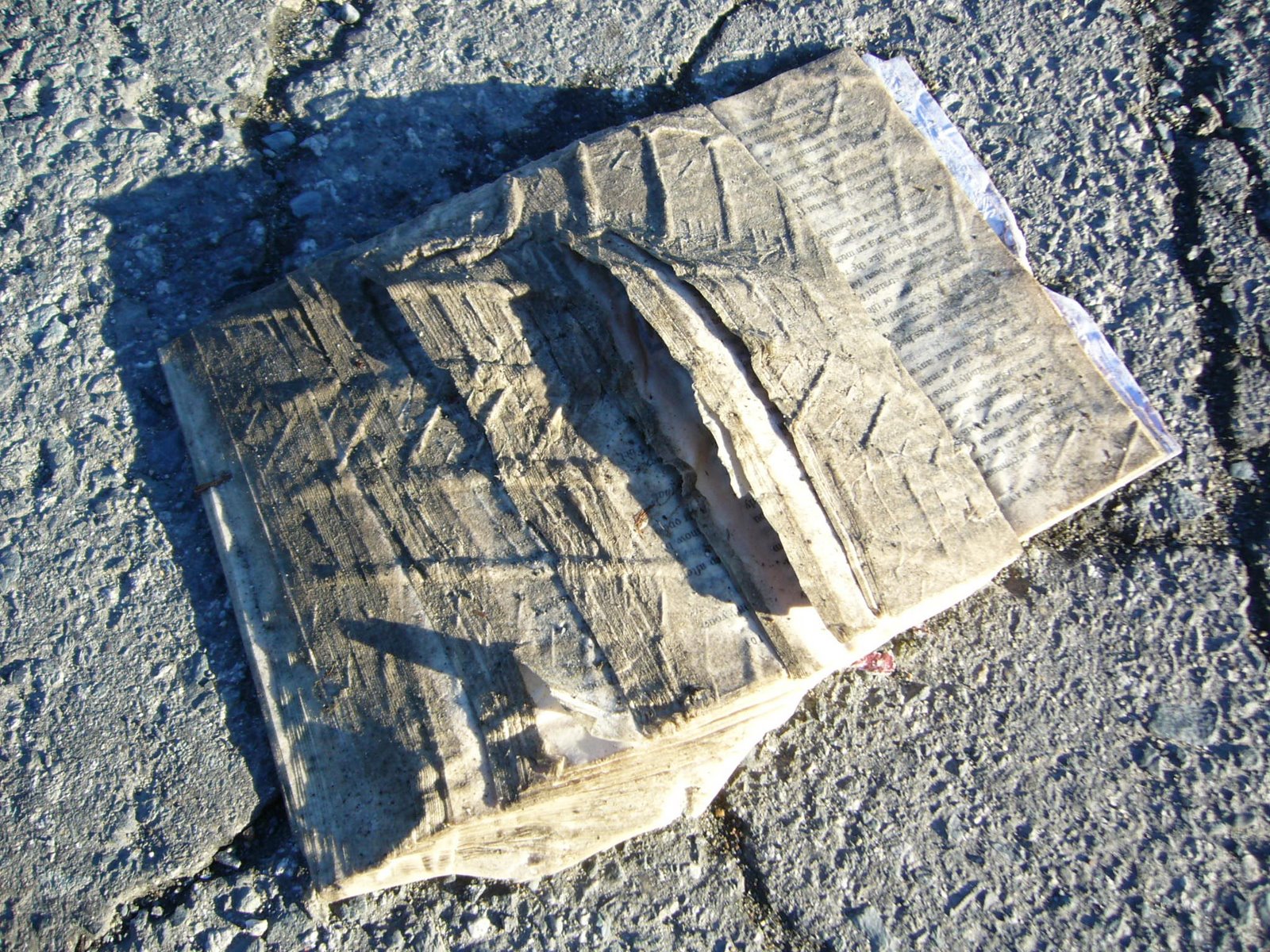
"Newly printed books certainly smell very different from older ones. The ink is so crisp. I’ve also noticed that books from different periods & different countries also have very different smells. And then there are the scents of different bindings: leather is marvelous of course but I find a peculiar pleasure in musty worn clothbound books as well. Perhaps just a hint of mildew…"

Sunday, December 02, 2007


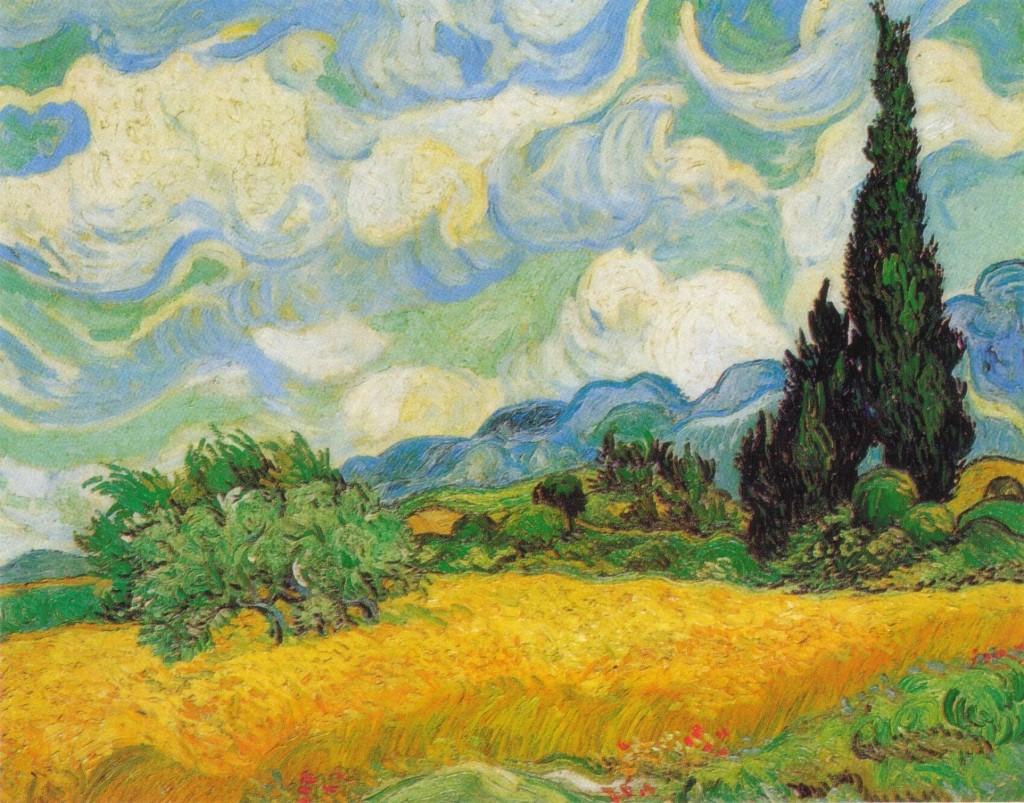
Sam Cummings of Tswawassen & his interpretation of Van Gogh's "Wheat Field With Cypresses"


via Ron this essay on Conrad--

"Critics have connected delayed decoding to impressionism and phenomenology, and Conrad himself described his literary task as "to make you hear, to make you feel ... before all, to make you see". And what he wants to make us see is: the lot. Not one side or another, not my point of view or yours, but the whole shooting match. As he put it in a letter to his friend Richard Curle: "my 'art' ... is fluid, depending on grouping (sequence) which shifts, and on changing lights giving varied effects of perspective..."


Local trees

Saturday, December 01, 2007

Why Are So Many Americans in Prison?

"The punitive turn in the nation’s social policy—intimately connected with public rhetoric about responsibility, dependency, social hygiene, and the reclamation of public order—can be fully grasped only when viewed against the backdrop of America’s often ugly and violent racial history: there is a reason why our inclination toward forgiveness and the extension of a second chance to those who have violated our behavioral strictures is so stunted, and why our mainstream political discourses are so bereft of self-examination and searching social criticism. This historical resonance between the stigma of race and the stigma of imprisonment serves to keep alive in our public culture the subordinating social meanings that have always been associated with blackness. Race helps to explain why the United States is exceptional among the democratic industrial societies in the severity and extent of its punitive policy and in the paucity of its social-welfare institutions..."

J. Hoberman on "I'm Not There"--

"Dylan always identified with directors; he imagined his own life as a movie. Yet to appear in a movie would be to fix an identity, to admit that one was acting. Perhaps it was this conflict that denied him something like Mick Jagger's charmed résumé—collaborations with Kenneth Anger, documentaries by the likes of Peter Whitehead, the Maysles brothers, and Robert Frank, a career-defining performance in the cult film Performance. Jean-Luc Godard made a Rolling Stones rehearsal the centerpiece of One Plus One; Dylan had to make do with an inane dis in Masculine-Feminine: "Who are you, Mr. Bob Dylan?" Hey, how did Godard guess that the question of identity would haunt every movie (and every move) that Mr. Bob Dylan would make?"

Thursday, November 29, 2007


Local trees

CRAWLSPACE BOOK LAUNCH READING & CD RELEASE PARTY
Featuring: Seattle poets DANIEL COMISKEY & C.E. PUTNAM


Where:

RENDEZVOUS JEWELBOX THEATER, 2322 2nd Ave Seattle, WA
Located in the historic Rendezvous Bar & Restaurant
This venue is age 21 & over


When:

SUNDAY, DECEMBER 2, 2007—7:30pm. One night only


Tickets:

This event is FREE. No reservation required, but seating is limited to 60
persons


Merch:

BOOK & CD PACKAGE available for the first time on the night of the performance
$12 special night-of-reading price (regular $14 retail thereafter)
Book cover features original 3-D graphic art (3-D glasses free with every
purchase)


CRAWLSPACE is a collaboratively written book-length poem by Seattle writers
Daniel Comiskey & C.E. Putnam, originally commissioned by Doug Nufer for
presentation at OseoO Gallery’s Leg to Stand On reading series. A bonus
compact disc, the Crawlspace Audio Companion, comprises a reading of the work
by the authors, set within an innovative sound collage conceived and produced
by C.E. Putnam and featuring the voice of Stanley Shiebert, Librarian in the
Arts, Recreation & Literature department of the Seattle Public Library.

DANIEL COMISKEY was pretty good at the dodging part in dodge ball, was coeditor
of Monkey Puzzle, a magazine of poetry and prose, and worked as literary
manager for The Poet’s Theater. His translations of Hu Xudong, produced in
collaboration with Chinese scholar Ying Qin, appear in Another Kind of Nation:
An Anthology of Contemporary Chinese Poetry. His work is also included in the
Seattle Writers Issue of Golden Handcuffs Review.

Seattle born, C.E. PUTNAM has stopped the Space Needle with his foot. He also
maintains P.I.S.O.R. (The Putnam Institute for Space Opera Research;
http://www.pisor-industries.org). Recent works include: Manic Box (2001);
Didyou ever hear of a thing like that? (2001); Things Keep Happening (2003);
Frolic: Selected Cosmic Sex Earthly Love Poems (1994-2007).


For more information, and to view the groovy trailer for the poem, please visit:

http://www.pisor-industries.org/crawlspace

Wednesday, November 28, 2007


the over the flu ::: wood s lot ::: has a bunch of excellent links for William Blake's birthday...

Tuesday, November 27, 2007


magnificent YouTube - Bob Dylan - Restless farewell at the Sinatra 80th in '95...
Obey or Die

"If the authorities believed he had to be "subdued," they had any number of other means of achieving that end -- means that would not have been fatal. But for the state, such calculations are irrelevant. Dziekanski was too much trouble; easier to eliminate him. The fact that he had become "too much trouble" as the DIRECT RESULT of the state's own criminal incompetence is forgotten..."

Sunday, November 25, 2007


fun quadruple bill from film editor Thelma Schoonmaker on TURNER CLASSIC MOVIES tonight, including her late husband Michael Powell's "Colonel Blimp" and the more rarely seen "Edge of the World" & "Age of Consent"...

Saturday, November 24, 2007


review of Alexander Watson's Marginal Man: The Dark Vision of Harold Innis which I've just started reading. Here's another one & the Wikipedia entry is very good...


Ezra Pound at Expo '67?

"Pound’s appearance at Expo may have been one of the great non-events in Canadian literary history but it would be an ideal subject for a speculative novel, one that would feature high-level politicians like Pearson, Diefenbaker and Trudeau, Quebec neo-Nazis and fans of Lionel Groulx, and a host of dithering writers and poets..."

bye-bye John Howard

"Remember that heading in the Herald a few weeks back, after one of the opinion polls bumped up the Government's lousy standing a point or two? "Lazarus stirs", it said optimistically of John Howard. Wrong. It was just the flies moving..."

Friday, November 23, 2007


soon-to-turn-one Belle sez: Time for Toast!

good essay on The Leopard

"Partly because Lampedusa took the opportunity to vent his spleen against Italian opera, Sicilian indiscretion, political corruption, greed, and a whole host of other shortcomings he associated with his native place, The Leopard has been viewed by many of his countrymen as anti-Sicilian or even anti-Italian. Its politics have also been disparaged as right-wing or reactionary, though Louis Aragon, the French Marxist, interpreted it instead as a left-wing critique of the right-wing aristocracy. Such views strike me as severely inadequate. If The Leopard manifests doubts about the Sicilian character, it does so very much from the inside, and if it has any politics at all, it is neither of the right nor of the left, but rather a politics of irony.

But can there be such a politics? Fervid electioneers and dyed-in-the-wool adherents of the various ideological isms would say no. On the other hand, slyly dissident satirists of the Soviet system, German-speaking Jews like Karl Kraus, and the helpless, hopeless critics of the present American administration might all say yes. To see the local with the distance of the astronomical and at the same time to feel its tragedies locally: That is politics, surely, of a very useful sort..."

Thursday, November 22, 2007

Enabling Martin Amis

"Though he was forced to squirm a little, Amis refused to recant or apologise. His demeanour throughout was the ostentatious weariness of the unfairly traduced, and he called for an end to the whole dull business. "Can I ask him [Eagleton], in a collegial spirit, to shut up about it?" he wrote in a letter to this newspaper.

Do we let the homophobe off the hook just because he tells his critics to shut up? Do we pass over the rantings of the antisemite just because he did not commit the poison to the page? To judge from the response of most liberal commentators, the defence seemed to work, and Amis's wish to have a line drawn under the affair was granted. While Eagleton was attacked as a clapped-out marxist, Amis was commended, by a writer in the Observer, for "owning up - bravely, as it turned out - to what amounted to a revenge fantasy". His "thought experiment" was the incautious but challenging musing of one of the most vivid and verbally energetic modern writers in English. In the Guardian, one writer concluded that although he was often irritating, Amis had raised important questions, while among the rhetorical questions asked by Professor John Sutherland was whether Eagleton's - Eagleton's! - position at Manchester University was tenable after labelling a colleague a bigot and a racist..."

glad I was able to make it to Evan Lee's beautiful new show--

"At Monte Clark Gallery, Evan Lee’s Drawing, Photography juxtaposes small graphite drawings of elderly Chinese women with two large scale black and white photographs, one of a woman working in a backyard garden, the other a portrait of the artist’s frail grandmother shortly before her death, reclining on a bed surrounded by framed family photographs of her children and grandchildren.

Much of Lee’s work plays, like Gergley’s, with double meanings. Lee has previously photographed cardboard boxes that look like smiling cartoon faces, ginseng roots resembling exotic birds, and transparent plastic drafting tools that imply flamingos or cartoon snakes. In this new exhibition, the “doubleness” of Lee’s work is put aside in favor of the direct representation of his subjects. His pictures’ apparent lack of a straightforward message, moral, or theme is actually the result of Lee’s deliberate decision to represent his subjects as they are, paying careful attention to each woman’s gestures, clothing, and physiognomy, thereby representing their individual specificity and avoiding the temptation to convert them into symbols or representatives of a “class.” Lee’s show is not flashy, and lacks the dry wit characterizing much of his recent photography, but the work is solid, brave and nakedly biographical..."