amongst "Crusade" reading just finished
Karen Armstrong's "Holy War" and am looking forward to Christopher Tyerman's
God's War, which has apparently supplanted the mighty Sir
Steven Runciman's three-volume account, which put the "gist" in magisterial. Runciman's 2000 Telegraph obit is worth printing in full both as the record of an an amazing life and a priceless example of that paper's ownership of the genre (slipping a little lately though--I noticed they had Glenn Ford as the good guy in "Yuma" yesterday, tsk)--
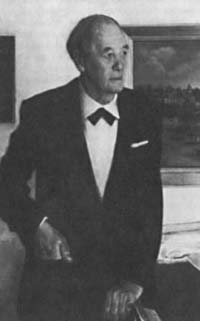
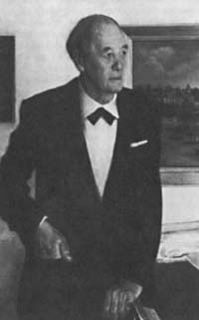
Sir Steven Runciman
SIR STEVEN RUNCIMAN, who has died aged 97, was the pre-eminent historian of the Byzantine Empire and of the Crusades; he was also a celebrated aesthete, gentleman scholar and repository of the civilised values of Edwardian times.
His magnum opus was the three-volume A History of the Crusades, published
between 1951 and 1954. In its preface Runciman set out his credo, one that
derived from Gibbon, and stressed the claims of grand narrative over narrow
analysis: "I believe that the supreme duty of the historian is to write
history, that is to say, to attempt to record in one sweeping sequence the
greater events and movements that have swayed the destinies of man."
For Runciman, the Crusades were not romantic adventures but the last of the
barbarian invasions, albeit ones that brought about the dominance of Western
civilisation. His opinion was partly determined by his sympathy for the
Byzantine Empire, often at odds with the Crusaders and an oasis of culture
surrounded by unappreciative savages.
It was a condition with which he identified. His prodigious work on a
culture previously damned as effete was largely responsible for the
blossoming of Byzantine studies in Britain.
His view of the historian's task - and his belief that one writes to be
read - demanded that he aim as much at a non-specialist audience as at
fellow academics. His lucid style was admirably suited to this, with a
simplicity and dispassion that had been the ideal of Byzantine
iconographers. The popular success that his books enjoyed showed that others
too came to enjoy the labyrinthine complexities of Levantine history.
They had in Runciman a surefooted guide who could render the past visible
and familiar, as in a memorable description of the messianic Peter the
Hermit - "his long, lean face horribly like that of the donkey he always
rode".
James Cochran Stevenson Runciman was born in Northumberland on July 7 1903. He was the second son of Walter Runciman, a member of Asquith's cabinet, and the grandson of a shipping magnate, Lord Runciman.
Steven's father was created Viscount Runciman of Doxford in 1937 and the
next year led the mission that persuaded the Czech government to make
concessions to Hitler.
Steven's mother was the first woman to take a First in History at Cambridge
and the first wife of an MP also to secure a seat in the Commons. Steven
breathed a rich mixture of political gossip (he would go on to meet all but
three of the 20th century's Prime Ministers).
One of his first memories was of waiting for suffragettes to carry out their
vow to break the windows of the houses of Cabinet Ministers. With their
afternoon walk imminent, Steven and his young sister inquired of the two
burly ladies waiting outside when their protest would begin, since they were
anxious not to miss the fun. The campaigners left in a huff, and the
Runcimans' was the only house left undamaged that afternoon.
Steven could read Latin and Greek by the time he was six. He was a frail
child, with a shyness that he learned to hide but never overcame. In 1916 he
went to Eton as a King's Scholar; the future George Orwell was in the same
election. In his first year, however, Runciman grew seven inches and his
worried parents kept him at home for much of the remainder of his
schooldays. He passed the time reading history books.
Consequently, when he did see his teachers he thought them ill-informed. "I
wish this boy was kinder to me," read one master's report.
In 1921, Runciman went up as a History scholar to Trinity College,
Cambridge. There he found in the fashionable pose of aesthete a mask for his
diffidence. Among those invited to take roseleaf jam in his rooms - home to
a large green parakeet named Benedict - were two other beautiful young men,
the aspiring arbiters of taste Stephen Tennant and Cecil Beaton.
Beaton hastened to copy Runciman's liking for Fair Isle sweaters and used
him as one of his first models, photographing him with a budgerigar on his
finger.
Runciman took every opportunity to travel, visiting Istanbul for the first
time in 1924. There he was told by a gypsy, correctly, that he would have
several illnesses but live to a ripe old age. Runciman had a lifelong
fascination with the supernatural (and the naturally superior); he later
read the tarot for King Fuad of Egypt and became court fortune teller to
King George II of the Hellenes.
On graduating in 1924, Runciman approached practically the only scholar then
interested in Byzantine studies, J B Bury, and asked to be his pupil. Bury
initially refused, relenting only when he learned that Runciman could read
Russian; he promptly thrust articles in Bulgarian at him and told him to
come back in two weeks.
Later lessons proved difficult to arrange, as Bury's overprotective wife
took the precaution of burning all letters addressed to him. Runciman was
reduced to waylaying Bury during his daily walk along the Backs.
Runciman's dissertation on a 10th-century Byzantine emperor secured him a
Fellowship at Trinity in 1927, and provided material for his first two
books, The Emperor Romanus Lecapenus (1929) and The First Bulgarian Empire (1930).
His researches had, however, been interrupted by pleurisy, and in 1925 he
recuperated by sailing to China. In Peking, he was summoned to play piano
duets with the ex-Emperor, Henry Pu Yi, who told him that he had chosen his
forename out of fondness for the Tudors; his chief concubine, whom he hated,
was named Bloody Mary.
When Runciman returned to Cambridge, he found that the college servant with
whom he had boarded his parakeet refused to relinquish the bird, telling him
sternly: "Polly likes it here."
Runciman taught at Cambridge until 1938 and was fondly regarded by his
students, among them Noel Annan and Guy Burgess. He also continued to travel widely, collecting people and places. His charm brought him friends that
included George Seferis, Benjamin Britten and Edith Wharton, while his taste
for exalted company brought encounters with, among others, the royal houses
of Bulgaria, Romania, Siam and Spain.
He saw much of the world before it subscribed to a uniform culture. In 1934
he visited Bulgaria, encountering the Istanbul-bound Patrick Leigh Fermor,
and on the way back from Mount Athos, Greece, in 1937 helped to deliver a
baby. It was, he said, "a sight no innocent bachelor should see".
In Siam he saw a ghost, which dissolved before his eyes, but missed lunch
with Bao Dai when the young ruler of Vietnam broke his leg playing football;
"not," thought Runciman, "a suitable pastime for an Emperor."
During the Holy Fire ceremony in Jerusalem at Easter 1931, he and Princess
Alice, who were seated in a gallery, amused themselves by dropping molten
wax from their candles on to the bald patch below of the unpopular garrison
commander; the irate soldier was the future Field-Marshal Montgomery.
In 1937 Runciman inherited a substantial sum from his grandfather. This gave
him the freedom to surrender his Fellowship and concentrate on writing
books. When the Second World War broke out, he was recovering from severe
dysentery and his health meant that he was only offered the untaxing job of
censoring letters written by the Army's Cypriot muleteers. Burgess got him a
job instead with the Ministry of Information and he was soon back in
Bulgaria as press attache.
Runciman always denied that he had in fact been a spy there, but in the
records of the Italian Secret Service, which fell into British hands, he was
rated "molto intelligente e molto pericoloso".
In 1941 the Germans advanced on Sofia, and Runciman narrowly escaped death when a bomb exploded in the Istanbul hotel to which he had been evacuated.
The device, concealed in the embassy luggage, had been set to explode aboard
the train from Sofia; but the train reached Istanbul an hour early, and the
bomb killed eight people in the lobby as Runciman was inspecting his room.
In 1942 Runciman was appointed, at the Turkish government's request,
Professor of Byzantine Art and History at Istanbul University. There he
researched his history of the Crusades. Having used his diplomatic contacts
to smooth the accession of the young leader of the order, he was also made
an honorary Whirling Dervish.
From 1945 until 1947 Runciman headed the British Council in Greece, and from 1960 until 1975 he was President of the British Institute of Archaeology at
Ankara, but after the war he concentrated principally on his writing.
Among his later books was his only excursion into modern history, a
biography of the White Rajahs of Sarawak commissioned by the Colonial
Office, but more notable were The Fall of Constantinople, 1453 (1965) and a
compelling analysis of the massacre in 1282 that ended Charles of Anjou's
hopes of controlling the Mediterranean, The Sicilian Vespers (1958).
His study of dualist heresies, The Medieval Manichee (1947), remains a
standard work, while Byzantine Style and Civilisation (1975) is an exemplary
introduction to the subject.
Although he disliked public speaking, Runciman took up many requests to give
lectures so as to see new places, especially in America. In Alaska in 1970
he visited Eskimos who still followed the Russian Orthodox rite, and at Las
Vegas when he played the slot machines he twice hit the jackpot.
Runciman later became fond of the sunshine of Bahrain, but Greece remained
his first love. He was chairman of the Anglo-Hellenic League (1951-67), and
was instrumental in restoring the ill-maintained grave of Rupert Brooke on
the island of Skyros.
He was much honoured by the Greeks, who named a street after him in the
well-preserved Byzantine town of Mistras. He also became Grand Orator of the
Greek Church, historically the senior lay member of the Patriarch's synod.
For many years he kept a house in St John's Wood, London, where he gave
garden parties, but after he and his brother sold the island of Eigg, which
they owned, in 1966, he made his base a peel tower in Dumfriesshire.
There he kept hens and an excellent collection of drawings, including
sketches of Greece by Edward Lear. He was a Councillor Emeritus of the
National Trust of Scotland.
His partial memoirs, A Traveller's Alphabet (1991), recalled places he had
visited from Athos to Zion, but revealed little of himself. In person he
possessed courtesy, wit and culinary skill, and could, when treated as the
fusty academic that he was not, deploy an armoury of filthy stories. Four
hundred guests came to his 90th birthday party; his cake took the shape of
the greatest of all Byzantine churches, Hagia Sophia.
In 1999, he presented the London Library (of which he was the
longest-serving life member) with a much needed new lift. A plaque within in
it bears his name and the Latin inscription Plurimi pertransibunt et
multiplex erit scientia (the Vulgate version of Daniel xii 4: "Many shall
run to and fro and knowledge shall be increased").
Earlier this year, aged 97, he made a final visit to Mount Athos to witness
the blessing of the Protaton Tower at Karyes (the capital of the monastic
community), which had been refurbished thanks to a gift from him.
Steven Runciman was knighted in 1958 and appointed a Companion of Honour in 1984. He was elected a Fellow of the British Academy in 1957.
He remained a bachelor, but liked the idea of marrying an elderly Spanish
Duchess in order to become a Dowager Duke; the title, he felt, would have
rather suited him."