Wednesday, June 29, 2005


great site for the Finnish epic "Kalevala" also has sound files for the dulcimer-like Kantele--

"Little Otso, woodland apple,
Honeypaw, you dear stout fellow,
When you hear this good man coming,
Hear me stepping softly near you,
Knot your claws up in your fur
And your teeth inside your gums
So that they can do no harm
Even when you're on the prowl.

"0 my bearkin, you my only,
Honeypaw, my little beauty,
Just lie down on turfy tussock,
Go to sleep on a lovely rock
Where the tall pines sway above you
And you hear the fir trees humming.
There, my Otso, roll about,
Twist and turn, my honeypaw
Like a hazel grouse on her nest,
Like a wild goose in her brooding."  Posted by Hello

Tuesday, June 28, 2005


from John Evelyn's Sylva--


"Of Pruning.

I. Pruning I call all purgation of Trees from what is superfluous. The Ancients found such benefit in Pruning, that they feign'd a Godess presided over it, as Arnobius tells us: And in truth, it is in the discreet performance of this Work that the Improvement of our Timber and Woods does as much consist as in any thing whatsoever. A skilful Planter should therefore be early at this work: Shall old Gratius give you Reason and Direction?

Nunquam sponte sua procerus ad aera termes

Exiit, inque ipsa curvantur stirpe geniste.

Ergo age luxuriam primo f_tusque nocenteis

Detrahe: frondosas gravat indulgentia silvas.

Post ubi proceris generosa stirpibus arbor

Se dederit, teretesque ferent ad sidera virge,

Stringe notas circum, & gemmanteis exige versus.

His, si quis vitium nociturus sufficit humor,

Visceribus fluit, & venas durabit inertes

.

And his incomparable Interpreter thus in English:

Twigs of themselves never rise strait and high.

And Under-Woods are bow'd as first they shoot.

Then prune the boughs; and Suckers from the root

Discharge. The leavy wood fond pity tires;

After, when with tall rods the tree aspires,

And the round staves to heaven advance their twigs,

Pluck all the buds, and strip off all the sprigs;

These issues vent what moisture still abound,

And the veins unimploy'd grow hard and sound.

2. For 'tis a misery to see how our fairest Trees are defac'd, and mangl'd by unskilful Wood-men, and mischievous Bordurers, who go always arm'd with short Hand-bills, hacking and chopping off all that somes in their way; by which our Trees are made full of knots, boils, cankers, and deform'd bunches, to their utter destruction: Good husbands should be asham'd of it. As much to be reprehended are those who either begin this work at unseasonable times, or so maim the poor branches, that either out of laziness, or want of skill, they leave most of them stubs, and instead of cutting the Arms and Branches close to the boale, hack them off a foot or two from the body of the Tree, by which means they become hollow and rotten, and are as so many conduits to receive the Rain and the Weather, which perishes them to the very head, deforming the whole Tree with many ugly botches, which shorten its life, and utterly marre the Timber.

3. By this Animadversion alone it were easie for an ingenious man to understand how Trees are to be govern'd; which is in a word, by cutting clean, smooth, and close, making the stroke upward, and with a sharp Bill, so as the weight of an untractable bough do not splice, and carry the bark with it, which is both dangerous and unsightly.

4. The proper season for this work is a little after the change in January:

_____ Tunc stringe comas, tunc brachia tonde:

_____ Tunc denique dura

Exerce Imperia, & ramos compesce fluenteis.

But this ought not to be too much in young Fruit-trees, after they once come to form a handsom head; in which period you should but only pare them over about March, to cover the stack the sooner, if the Tree be very choice: To the aged, this is plainly a renewing of their Youth, and an extraordinary refreshment: Besides, for Interlucation, exuberant branches, & spissae nemorum come, where the boughs grow too thick and are cumbersome, to let in the Sun and Air, this is of great importance."

Posted by Hello

suggested subjects for painters and engravers, from John Aubrey's Natural History of Wiltshire--

"PROSPECTS.

1. From Newnton (Mr. Poole's garden-house) is an admirable prospect.
It takes in Malmesbury, &c. and terminates with the blew hills of
Salisbury plaines. 'Tis the best in Wiltshire.- Madam Estcourt, or
Earle of Kent.

2. From Colern Tower, or Marsfield downe, eastwards; which takes in
Bradstock Priory, several steeples and parkes, and extends to
Salisbury plaine. - D. of Beauford, or Marq. of Worcester.

3. From the garret at Easton Piers, a delicate prospect. - J. Aubrey.

4. From Bradstock Priory, over the rich green tuff-taffety vale to
Cyrencester, Malmesbury, Marsfield, Colern, Mendip-hills; and
Coteswold bounds the north horizon. - Earle of Abingdon.

5. From Bowdon Lodge, a noble prospect of the north part of Wilts. -
Hen. Baynton, Esq.

6. From Spy Park, westward. - Hen. Baynton, Esq.

7. From Westbury Hill to the vale below, northward. - Lord Norris.

8. From the south downe of the farme of Broad Chalke one sees over
Vernditch, Merton, and the New Forest, to the sea; and all the Isle of
Wight, and to Portland. - J. Aubrey. (Memorandum. A quarter of a mile
or lesse from hence is Knighton Ashes, which is a sea marke, which
came into this prospect. The Needles, at the west end of the Isle of
Wight, beare from it south and by east; but try its bearings exactly.)

9. From Knoll Hill, a vast prospect every way. - The Lord Weymouth.

10. From Cricklade Tower, a lovely vernall prospect. - Sir George
Hungerford, or Sir Stephen Fox. (This prospect is over the rich green
country to Marston-Mazy, Down-Ampney, Cyrencester, Minchinghampton,
and Coteswold.)

11. From the leads of Wilton House to Salisbury, Ivy-church, &c. - Sir
R. Sawyer, Attorney-Genl.

12. The prospect that I drew from Warren, above Farleigh-castle Parke;
and take another view in the parke. - Sir Edward Hungerford. (This
prospect of Farleigh is in my book A, at the end; with Mr. Anthony
Wood.)

13. The prospect of Malmesbury from the hill above Cowbridge. This I
have drawn."

Posted by Hello

Monday, June 27, 2005


was recently pleased to meet Betty Smith, the great ballad singer and scholar. Her voice is remarkable; very light & small but possessed of a rigorously distanced "timeless" quality that defies analysis. The immersive-but-chilly affect of her "Psaltery Concert" album is closer to Nico's "Desertshore" than Joan Baez.  Posted by Hello

Sunday, June 26, 2005


"all the dopes he could drink"

(Sodom Laurel Album)

sip apple juice and icemelt
and icemelt and ice-
melt and icemelt and icemelt

sweet sweet sweet sweet tea
sweet sweet sweet sweet sweet sweet tea
sweet sweet sweet sweet tea

peach Nehi over the Laurel falls, Cheerwine,
& the unnamed second best orange pop
ever after Narvik Mandarin Fanta

a tangerine kick
through undiagnosed veins
in black floaters

spelled your name
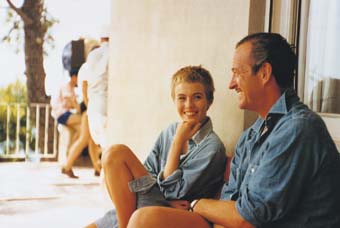
"Bonjour Tristesse"
when Jean Seberg's narration

moves from compromised
monochrome
present to a blue 'scope past

impressive even
on pan 'n' scan VHS
for its unblinking

existentialist noonday,
no thirst therefore
no beverages till cocktails

at the casino, no picnics
not even the Sirkean
consolation of objects

just the stairs to the beach
a foreground agreement,
a narrow recession,

an unplugged record player
that had earlier spun
Georges Auric's 1958 pre-Shankar

version of teenage ambient
the kind someone might remember
in a narration

who'd suppressed
(as I this Yoo-hoo coloured river)
everything else.

Posted by Hello

Friday, June 24, 2005


(Skinner in Buffalo, Oct '03)


"Spare Room Reading Series presents . . .

Jonathan Skinner
Reading and Publication Party
Sunday, June 26nd 7:30 pm

*Please note location*
Pacific Switchboard 4637 N. Albina Avenue Portland, OR (just south of Alberta street and just east of the I-5 freeway exit. You can reach us by taking the #4 Fessenden bus.)

FREE ADMISSION

www.flim.com/spareroom spareroom@flim.com

Please join us for a reading by Jonathan Skinner to celebrate the publication of his new book, Political Cactus Poems (Palm Press).
Jonathan Skinner edits ecopoetics in Buffalo, NY where he misidentifies birds along the Niagara River.
His work engages the various meanings of life outdoors, in the shape of a changing response to questions posed by the environments the poet physically inhabits. In part, the poetry operates as an instrument of research into a particular natural environment or a geological formation or species. In exchange, it offers forms of life measured to particular places, an invitation to inhabit the evolutionary imagination of the senses and of those places. His first book-length collection, Political Cactus Poems, which stem from the poet's life in the Southwest, challenges the pristine agenda of nature poetry by hybridizing themes from the lives of humans and cacti.

PRAISE FOR JONATHAN SKINNER'S Political Cactus Poems:
If cactuses could talk, poets be out of work. In the meantime, Jonathan Skinner's *Political Cactus Poems *are primers of attentive engagement; not only its pleasures responsibilities, but also its animations and metamorphoses. It's not just that we read what we see; Skinner imagines that we are read by what sees us. "Matter's clatter" is the echo of unheard songs. In these poems, the saguaro drinks our words and leaves us thirsty for more.
--Charles Bernstein

This is *Very* *Good* (*that's* *WHY* *I* *used* *it* when I taught at Mills, his *Little* *Dictionary* *Of* *Sounds*--I played the *Tape* *Of* *The Sounds* & GAVE THEM THE POEMS *he* *had* *written*!--*I* *didn't* *have* *to * *TEACH*!!) -- *'VOCABULARY'* + *'STUDY'* (somehow) Evidences *THE* *WORLD* *AT* *LARGE* in ManyWritten Poems--BRAVO!!
--Robert Grenier

The fact is, humanity's a drop in the bucket. But only scantily has poetry looked at the rest of the bucket. Jonathan Skinner in *Political Cactus Poems* makes a wonderful stab in that omnidirection. The language lays out its dynamics "as if" human and nature were one. The reader feels connections' displays not so much in terms of grammar as of a great series of metonymic grids, that feel like chemistry. Meanings dance rather than submit to linear equations. On p. 33 one of Skinner's dense but unadorned "tope prisms" ends "spots taking on chronologies of their own expanding in a series of rotational slides not yet confirmed. For the individual, stationary in the blast of current events no true point of balance is ever found." Mostly, they show-don't-tell. These down-to-earth cylinders, pulled from the air, are forwarding explorations in the most important direction poetry can go: out. Yet they're plenty human and fun to read.
A macro-micro delight.
--Jack Collom

Jonathan Skinner with his journal *ecopoetics *has been showing us how it is all connected. all systemic, all wonderful even while at risk. The poems in *Political Cactus Poems *do similar work as they tell the sad stories of contemporary politics (Milosevic and Bush show up at various moments) with the specific stories of various cacti. These poems direct and redirect our attention to the larger ethical issues of political and natural environments. They are tight, luminous poems that illustrate how the world is more complicated than most of us acknowledge.
--Juliana Spahr

Political Cactus Poems Price: $12.00. ISBN 0-9743181-1-6 Perfect-bound. Printed with soy-based ink on recycled paper, 100% post-consumer waste. 120 pages.
To order *Political Cactus Poems*, visit this link at the press website: www.palmpress.org "

Posted by Hello

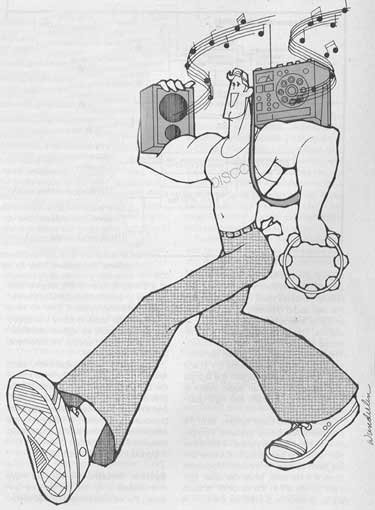
The Birth of Disco

"No one agrees on what the first disco record was. Shapiro votes for two Motown records from 1972-'73, Eddie Kendricks' "Girl You Need a Change of Mind" and the Temptations' "Law of the Land." Lawrence advocates for "Soul Makossa," by Manu Dibango and Isaac Hayes' "Theme from Shaft." (I'd argue for the much earlier "Band of Gold" by Freda Payne and Marvin Gaye's cover of "I Heard It Through the Grapevine.")

What Shapiro can state for sure is that a distinct sound began to emerge from these clubs that combined the heavy bass of Motown, the percussion of rock, the syncopation of Tin Pan Alley and hi-hat hissing from the new synthetic music machines.

One of the many revelations in this book is Shapiro's insistence of the primacy of 4/4 time. He shows how nearly all disco songs imitate marches, albeit at much faster b.p.m.'s (beats-per-minute).

In a larger context, he shows how New York's woes contributed to the emergence of disco. The city in the '70s was a broken-down mess, with the Bronx burning, the government broke and garbage and crime everywhere.

It was precisely that crucible of crumminess, however, that provided the subtext for a subculture built on hell-bent hedonism and coke-fueled all-night danceathons. "

Posted by Hello

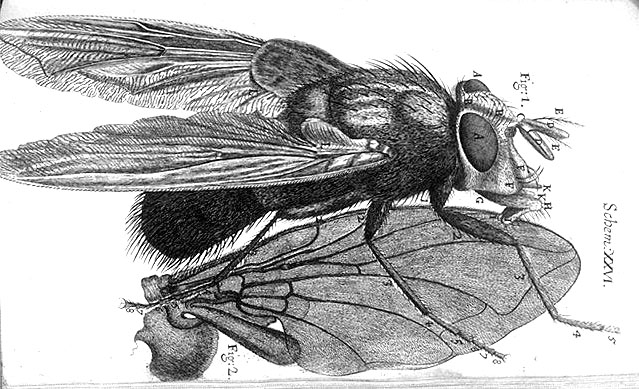
(Fly by Robert Hooke)

House or Window Flies

(from John Clare's notebooks)

These little indoor dwellers in cottages and halls, were always entertaining to me, after dancing in the window all day from sun-rise to sun-set they would sip of the tea, drink of the beer, and eat of the sugar, and be welcome all summer long, they look like things of mind or fairries, and seem pleased or dull as the weather permits in many clean cottages, and genteel houses, they are allowed every liberty to creep, fly, or do as they like, and seldom or ever do wrong, in fact they are the small or dwarfish portion of our own family, and so many fairy familiars that we know and treat as one of ourselves


Posted by Hello

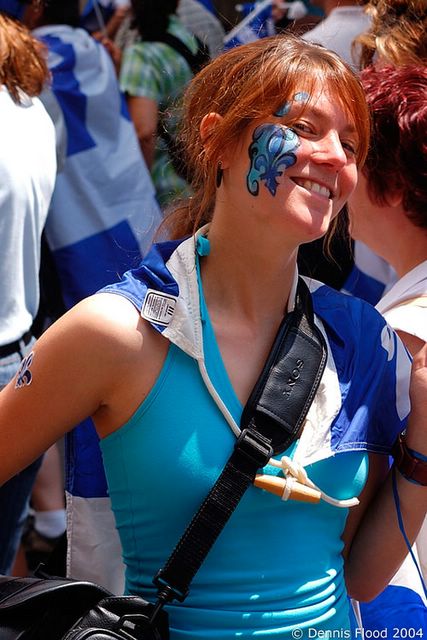
Bonne St. Jean!

"It is Ludger Duvernay, a Patriote and the founder of Societe Saint-Jean-Baptiste, who was the first to make the event a patriotic one, in 1834. Duvernay wished to unite the "Canadiens" of the day in the celebration of their national pride, in the hopes of bringing on political change and the end of the military British government. He chose the evening of Saint-Jean-Baptiste Day to invite about sixty illustrious guests, both French and English-speakers, to a great banquet where the future of the Canadien people was discussed. From that moment on, the old traditional French celebration became the national patriotic Fete of the people of Quebec."

Posted by Hello

good article on Cecil Sharp and Olive Dame Campbell collecting songs in the Appalachians--

"Shall I ever forget it. The blazing fire, the young girl on her low stool before it, the soft strange strumming of the banjo - different from anything I had heard before - and then the song. I had been used to singing Barbara Allen as a child, but how far from that gentle tune was this - so strange, so remote, so thrilling. I was lost almost from the first note, and the pleasant room faded from sight; the singer only a voice. I saw again the long road over which we had come, the dark hills, the rocky streams bordered by tall hemlocks and hollies, the lonely cabins distinguishable at night only by the firelight flaring from their chimneys. Then these, too, faded, and I seemed to be borne along into a still more dim and distant past, of which I myself was a part. "

Posted by Hello

Wednesday, June 22, 2005


was very happy to attend the Bluff Mountain Festival earlier this month. Advice for future attendees: the giant magnolias stageside offer many natural seats, the best barbecue is at the Lion's club tent & half regular and half sweet tea is just right.  Posted by Hello

Wake up! the new Lemon-Red mix series has a free 32 minute mix by DJ/rupture! Posted by Hello

Tuesday, June 21, 2005


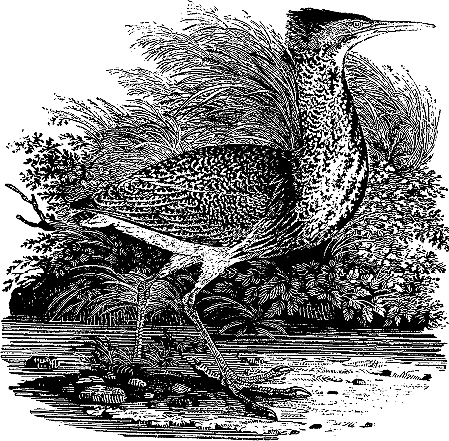
(Bittern by Thomas Bewick)

The Butter Bump (from John Clare's notebooks)

This is a thing that makes a very odd noise morning & evening among the flags & large reed shaws in the fens some describe the noise as something like the bellowing of bulls but I have often heard it & cannot liken it to that sound at all it is difficult to describe what it is like its noise has procurd it the above name by the common people the first part of its noise is an indistinct muttering sort of sound very like the word butter utterd in a hurried manner & bump comes very quick after & bumps a sound on the ear as if eccho had mocked the bump of a gun just as the mutter ceasd nay this is not like I have often thought the putting one's mouth to the bung hole of an empty large cask & uttering the word 'butter bump' sharply woud imitiate the sound exactly after its first call that imitates the word 'butter bump' it repeats the sound bump singly several times in a more determined & louder manner--thus 'butter bum/p bu/m/p b/u/m/p butter bum/p' it strikes people at first as something like the sound of a coopers mallet hitting on empty casks when I was a boy this was one of the fen wonders I usd often to go on a sunday with my mother to see my aunt at peakirk when I often wanderd in the fen with the boys a bird nesting & when I enquird what this strange noise was they desribd it as coming from a bird larger then an ox that coud kill all the cattle in the fen if it choose & destroy the villager likewise but that it was very harmless & all the harm it did was the drinking so much water as to nearly empty the dykes in summer & spoil the rest so that the stock coud scarcly drink what it left this was not only a story among chlidern but their parents believd the same thing such is th power of superstition over ignorant people who have no desire to go beyond hearsay & enquire for themselves but 'the world gets wiser every day' tis not believd now nor heard as wonder any longer--they say that it is a small bird that makes the noise not much unlike the quail tho a deal larger & longer on the legs they say it puts its beak in a reed when it makes the noise that gives it that jarring or hollow sound which is heard so far I have no knowledge of its using the reed but I believe they are right in the bird I have startend such a bird myself out of reed shaws myself were I have heard this noise & afterwards the noise has been silent which convincd me that the one was the bird I never saw but on the wing & it appeard to me larger than a pheasant of a li( ) & not unlike it in either shape or colour but it flew different--there is a great many of these birds on whittlesea mere & their noise is easily heard in the morning on the London road which is some miles distant its noise continues all summer & at the latter end of the year it is silent & hear no more till summer


Posted by Hello

Monday, June 20, 2005


"The Future" from Turkey, a site for the paintings of New Westminster artist Don Dingwall.

Posted by Hello

Sunday, June 19, 2005


Hotel Point--

"Trying to think how to

say what Bobby "Blue" Bland's voice does, mostly in the later recordings, sweet with maybe just a few burrs, a pebble or two for "texture" and out of nowhere a

snarling "Oh Lord" that's like a dog shaking a rabbit. Spooky good. Bob Dylan talks about "the early singers who sang like they were navigating burning ships." Enough

to make one into a connoisseur of voice-styling metaphor. Or Dylan (on Roy Orbison): "He was now singing . . . compositions in three or four octaves that made

you want to drive your car over a cliff. He sang like a professional criminal." What I did, clumb'd up out the gully, is read that Chronicles thing, writ in

Dylan's tetchy voice "fire, brimstone, a little half-crack'd, lying is formidable fun and allows the Saviour reason to reach down and "tetch" you, var. of teachy,

teechy, tetchy, tetchie, tecchy, titchie, tichy. Or dial. titchy, tertchy, tatchy, tachy ( ME. tecche, 16th c. tetche.) Say, short-

tempered; peevish, irritable; testy. Bonkers, touch'd. As Shakespeare saith: "Pretty foole." (Somewhere Dylan points to Pretty Boy Floyd and Al Capone, the latter

technocrat nobody's idea of folk-material, no scuff and devilment to him.) And: "I practiced in public and my whole life was becoming what I practiced." "

Posted by Hello

Friday, June 17, 2005


(Glenn Gould on the train to Churchill, Manitoba, preparing to record his radio documentary "the Idea of North")

I am going north to look for the source of the chill in my bones.


"A Canadian scientist who recently returned from a trip to measure the Pole's current location says it has now left Canadian territory and crossed into international waters.

"I think the Pole has probably just moved past the 200-nautical-mile limit," said Larry Newitt, head of the Natural Resources Canada geomagnetic laboratory in Ottawa. "It's probably outside of Canada, technically. But we're still the closest country to it.""

Posted by Hello

Thursday, June 16, 2005


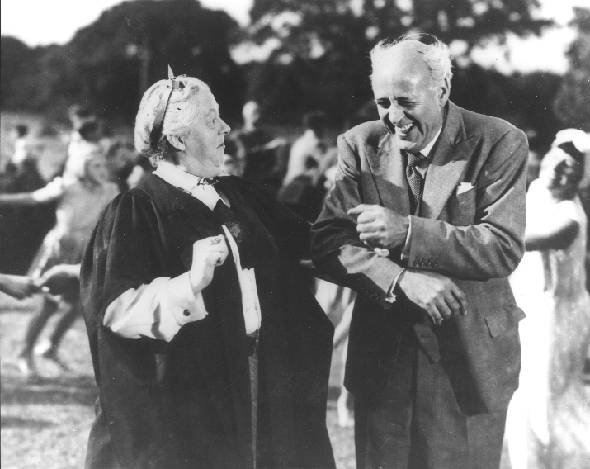
nice tribute to the immortal Alastair Sim (pictured with Margaret Rutherford in "The Happiest Days of Our Lives")--

"But the silent screen would have denied Sim his crowning glory: that extraordinary voice. Only Gielgud rivalled his tonal control and sensitivity to the musicality of the English language, and it comes as no surprise to learn that Sim was a successful elocution teacher before he turned to acting. His horrified realisation that the Ministry of Education has committed "a most appalling sexual aberration" in The Happiest Days of Your Life is made doubly delicious by the flawless rendition of every vowel, diphthong, consonant or plosive. His dictation of his novel Bloodlust in Laughter in Paradise filters hard-boiled American slang through incongruously patrician tones to even more hilarious effect, and his voice required surprisingly little modification to be wholly convincing as St. Trinian's headmistress Miss Fritton..." Posted by Hello

Expos' move marks end of baseball era in French

(--"the ball has eyes!" I remember, & feeling great national pride at making Clark Coolidge watch ten minutes of a game en francais at the Sylvia in 1988...(Duke Snider would call the games in English in that era)


"When Mr. Doucet described infielders moving to serrer les lignes de demarcation in the late innings of a close game, listeners would envision the players hugging the foul lines to guard against an extra-base hit. And if a frappeur de puissance (as sluggers are now known) hit a fleche (an "arrow," or line drive) into the right-center field allee, listeners held their breath to hear whether the coureur (base-runner) would round third base and file vers le marbre (dash toward the "marble," or home plate)."


(merci languagehat)


Posted by Hello

Wednesday, June 15, 2005


very well-done site on Horace Kephart, whose "Our Southern Highlanders" (1913) is still the definitive book on the southern Appalachians...

"So the western piedmont and the mountains were settled neither by Cavaliers nor by poor whites, but by a radically distinct and even antagonistic people who are appropriately called the Roundheads of the South. These Roundheads had little or nothing to do with slavery, detested the state church, loathed tithes, and distrusted all authority save that of conspicuous merit and natural justice. The first characteristic that these pioneers developed was an intense individualism. The strong and even violent independence that made them forsake all the comforts of civilization and prefer the wild freedom of the border was fanned at times into turbulence and riot; but it blazed forth at a happy time for this country when our liberties were imperilled."

Posted by Hello

In praise of The Bad News Bears

"Ritchie resists the temptation to depict the kids' foul mouths, questionable personal grooming habits, and all-around crumminess as cute precociousness. He isn't afraid to be both appalled and amused by them. The Bad News Bears offers a brief glimpse of a moment like the pre-code early '30s when movies had no use for moralism. The sawed-off badass (Jackie Earle Haley) who becomes the Bears' star slugger smokes his way through the movie; Buttermaker slips the kids beers after they play a particularly good game..."

Posted by Hello