Saturday, February 05, 2011
Friday, February 04, 2011

Thursday, February 03, 2011






Wednesday, February 02, 2011

Bruce Conkle: Who the Hell is Piet Mondrian?
Friday, February 4th. The Gallery will exhibit Conkle's past and recent
illustrations and installations, including his gilded tree burls from
the October 2010 show at WorkSound, viewed together for the first time.
Bio: Bruce's work often deals with escapism, artificial worlds, and
man's place within nature, and frequently examines what he calls the
"misfit quotient" at the crossroads. Whimsical, absurdist, and deeply
symbolic, his work often uses art and humor to address contemporary
attitudes toward nature and environmental concerns. His work has shown
all over the world, including Reykjavik, Rio De Janeiro, New York,
Miami, and Portland. Recent projects include public art commissions for
TriMet/ MAX Light Rail and PSU's Smith Memorial Student Union Public Art
+ Residency. In 2010 Bruce received an Oregon Arts Commission Artist
Fellowship and a project grant from the Regional Arts and Culture
Council. http://www.bruceconke.com info@bruceconkle.com
WHAT: Project Grow presents Bruce Conkle: Who the Hell is Piet
Mondrian? WHEN: Opening reception Friday, February 4th from 7 to 10 pm.
Gallery hours Mon-Fri 9am- 5pm and by appointment 503.236.9515 x116.
Continues through Feb 28. WHERE: The Gallery at Port City: 2156 N
Williams Ave. Portland 97227
Tuesday, February 01, 2011

3.
It's never quite clear
what they're up to
the men who live
on wires & shelves.
A shitstorm of data
a shark that walks on land
the amount of snow won't matter
to the phone in your hand.
Mahler's 1st
Jimmy Caan crosses Roebling's bridge
in a Cadillac to deliver
leaves to the Harlem River.
Bird shadow in the big holly
lost in the dust on the shade
forced air feathered melancholy
fluffs the scratch the branch made.
The men who live on wires & shelves
are mute even to themselves.
Monday, January 31, 2011

The H.D. Book
The dominant rhythm is recurrence, with the writing (and rewriting) forming a palimpsest that diagrams movements of soul as well as patterns of literary process. Chapter 8, dated "March 21, Tuesday, 1961," begins with an early-morning fragment of dream that Duncan then tracks through a labyrinth that include Baudelaire, the game of charades, Jehovah's backside, the alchemy of Freudian analysis, shit and cunts, the play of verse/versus/version/aversion, and the marginalia of Jack Spicer...

Wednesday, January 26, 2011
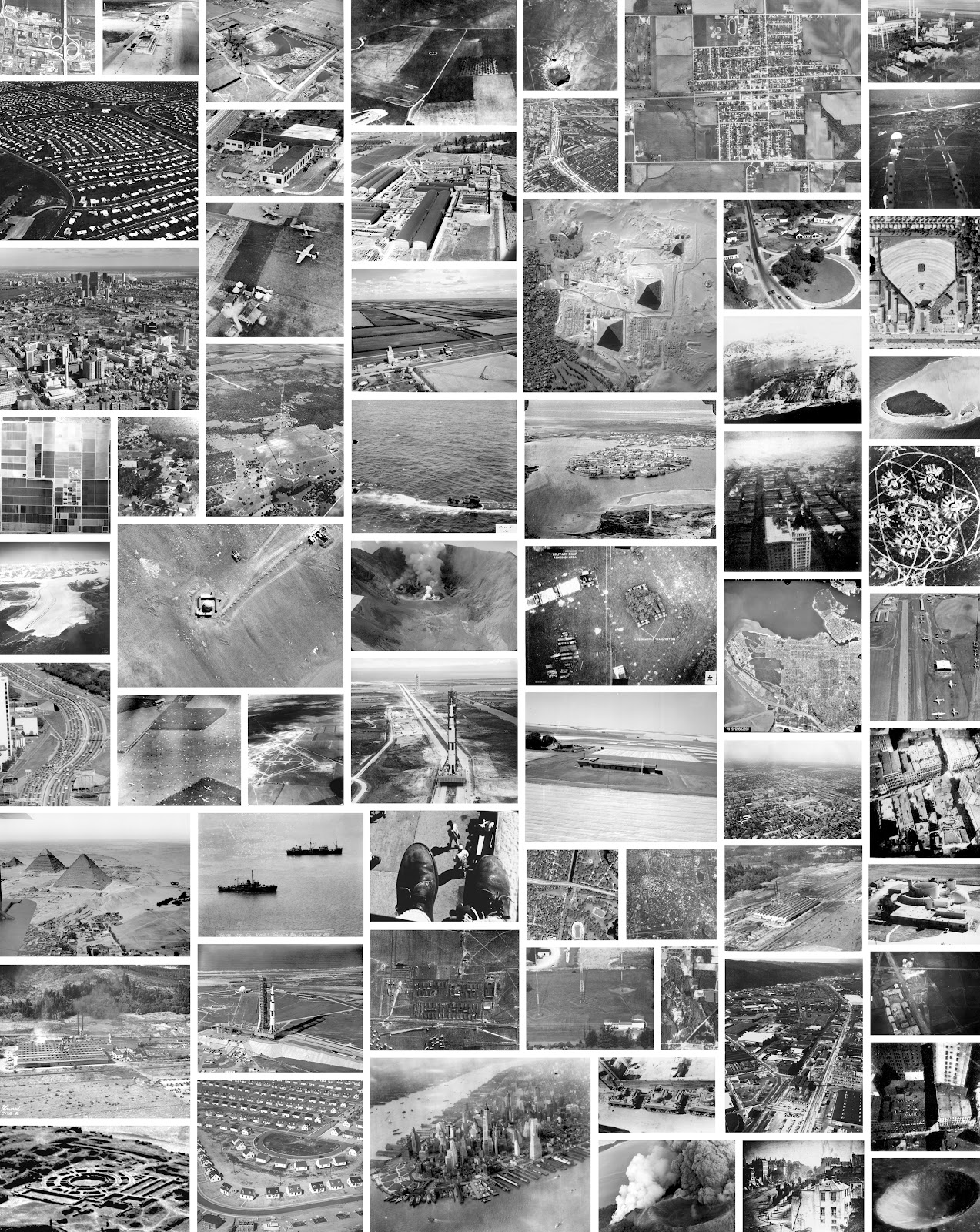
Roy Arden's giant multimedia extravaganza "Under the Sun" is opening at the CAG on 555 Nelson tomorrow at 6---
Tuesday, January 25, 2011
 2.
2.This snowball smells like expired aspirin
with diesel upchuck copperhead breath--
but then what?
I wish Captain Beefheart
had played more clarinet,
the terrible headaches I would get
after parties from being at
them too long, through orange streets
to the 7-11--plume of vapour heat
in the cold Adanac back room
digitally added with optical zoom--
On Lok tap running closed tight
walking through a big stripe
across Victoria & Hastings a big red stripe
oh its bad in this kind of thing
when the opera lady starts to sing
& it goes all sepia, an ocarina
hand a sandstone screen,
a quarter inch of pink snow
cast iron stumps where though
they'd taken railings away for the war
Dad said we still paid & paid
getting it back in the form of blades
& Starfighters, well into the decade.
Lend-lease. The price of peace.
People that had figured out,
ways to make money, to tout.
To spiv. Cut your hand on his
wing collar, you could.
A mustache behind, a hood
a brothel creeper, a secret weeper.
A solid ten per cent
his demob suit rent.
Thus from the stage of the Commodore
the Captain turned & said
Read Wyndham Lewis
Apes of God! Apes of God!
meaning, I guess, that even
the over-egged & overdrawn
grotesque dreadnoughts
blundering bitterly through
the baking heyday pages
of the Torquemada modernism
I'm glad I missed
are more interesting
than you assholes--
I'm going to go home & paint!
But the Commodore bathroom
is everywhere, they only
pretend to stamp your hand
a pot flung into your face
half-amusingly
forever--never
a good town for crowds
they just up & leave you lonely
rather than bringing
the audience home
rather than just going home.
Sunday, January 23, 2011


Saturday, January 22, 2011
Farewell, Etaoin Shrdlu (1980) 1/2
Farewell Etaoin Shrdlu
Filmed at The New York Times during production of the last edition that used centuries-old hot-metal typesetting. Editors, printers, stereotypers and pressmen are seen working with traditional letterpress printing. The printers are later seen, retrained, composing images by electronics and running computer-driven videotype-setters. Clearly shows how a newspaper is put together by old and new methods and how some workers feel about adapting their skills to the change. ("ETAOIN SHRDLU" was formed by striking the first twelve keys on a Linotype machine keyboard. The operator hit these keys to quickly finish a line which had an error in it. The line was then discarded.)

Guernica / Detroitism
Michigan Central Station appears to be a potent symbol of decline and the inevitable cycles of capitalist booms and busts. But there’s also money to be made on destruction. The decrepit station has been owned for years by the city’s most notorious real estate mogul, Matty Moroun, a politically-connected, Teflon-coated trucking magnate who owns the bridge to Canada and covets land near the city’s major transportation hubs. Alas, a photograph can tell us little about the city’s real estate industry and the state’s cheaply-bought politicians. All it can do is show the catastrophic results. Taken together, all the images of the ruined city become fragments of stories told so often about Detroit that they are at the same time instantly familiar and utterly vague, like a dimly remembered episode from childhood or a vivid dream whose storyline we can’t quite remember in the morning: Murder city! Unemployment! Drugs! White flight! Crime! Because the ironic appeal of modern ruins lies in the archaeological fantasy of discovery combined with the banality of what is discovered—a nineteen-eighties dentist’s office is not implicitly fascinating for anyone who inhabited one in its intact state—a ruin photograph succeeds in providing the details of a familiar story whose major plot points we can’t piece together...
Subscribe to:
Posts (Atom)