Thursday, December 07, 2006


sad to learn here that the essayist George Trow has died. His 1980 "Within the Context of No Context" was crucial for me.

“Television is dangerous because it operates according to an attention span that is childish but is cold. It simulates the warmth of a childish response but is cold. If it were completely successful in simulating the warmth of childish enthusiasm — that is, if it were warm — would that be better? It would be better only in a society that had agreed that childish warmth and spontaneity were equivalent to public virtue; that is, a society of children. What is a cold child? A sadist.”

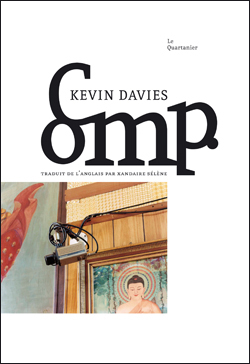
Kevin Davies' Comp., traduit de l'anglais par Xandaire Sélène

"Comp. dresse un portrait acide de l'Amérique au tournant du XXIe siècle. Dans le prolongement critique de la poésie L=a=n=g=u=a=g=e, Kevin Davies tire son matériau lyrique des discours qui font la sphère publique nord-américaine. Livre-poème en cinq parties, Comp. désarçonne et relance la lecture par une composition libre, qui sélectionne, assemble, remixe. Ruptures de ton, glissements de sens, syntaxe et vers combinatoires emportent cette comédie de langage, où se profile l'homo economicus moderne en pleine surproduction agitée.

S'écrivant depuis des points de vue toujours mobiles, Comp. se construit en reprenant à son compte les thèmes, les préoccupations et les rhétoriques du pouvoir, du militarisme, de l'obsession de la gestion, des combats idéologiques, de l'automatisation, du corporatisme triomphant, du consumérisme comme mode de vie, de la médiation à tout prix et en tout.

Au-delà de la vigueur critique des textes, la composition rythmique et visuelle de chaque page, de chaque poème confère au livre une beauté indéfinissable, en porte-à-faux, où résonnent, flottant, les échos d'un feuilleton collectif que tous les langages traversent d'office : Comp. les éprouve et les ausculte à l'écoute de vérités pliées.

Délicieuses erreurs de communication, les phrases et les vers se font ici en se défaisant, et leur force est de réaliser le potentiel poétique du bruissement continu des discours qui nous entourent – qui constituent le véritable landscape américain d'aujourd'hui, qu'il est encore possible d'investir et de transformer..."

Tuesday, December 05, 2006

Monday, December 04, 2006


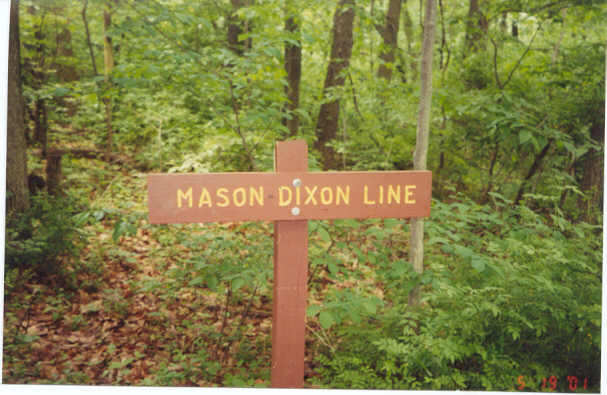
Hap'ly re-reading Thomas Pynchon's Mason & Dixon in preparation for planned post-Xmas curl-up with the new one & suddenly here is this splendid on-line reference...

Sunday, December 03, 2006


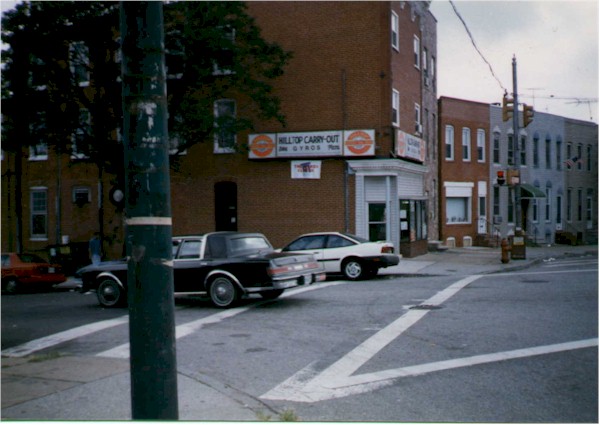
a mention on "The Wire" made me curious about the Lake Trout Sandwich, a Baltimore favorite--

"Rob Kasper, writing in this paper some time back, suggested that the name lake trout caught on because it was a more appealing moniker than whiting. But I prefer the story told by John Shields in his book Chesapeake Bay Cooking. Shields conjures the image of the last fishing boat of the day making for shore. As the crew nears the dock, a worker sings out, "Late trout! Late trout." The buyers, unfamiliar with the Chesapeake Bay accent, hear, "Lake trout! Lake trout!" Pick a story or make up your own..."

Hiroshi Teshigahara's The Face of Another a film I've been trying to see for years, on TCM at 2300 PST tonight....

Friday, December 01, 2006

Interviewing the man behind "The Wire"

"Slate: If you had to sum up what The Wire is about, what would it be?

Simon: Thematically, it's about the very simple idea that, in this Postmodern world of ours, human beings—all of us—are worth less. We're worth less every day, despite the fact that some of us are achieving more and more. It's the triumph of capitalism.

Slate: How so?

Simon: Whether you're a corner boy in West Baltimore, or a cop who knows his beat, or an Eastern European brought here for sex, your life is worth less. It's the triumph of capitalism over human value. This country has embraced the idea that this is a viable domestic policy. It is. It's viable for the few. But I don't live in Westwood, L.A., or on the Upper West Side of New York. I live in Baltimore..."