Monday, November 20, 2006


on Dec 1 at 2300 PST on TCM don't miss Vincent Price in the very scary & timely Witchfinder General

" Price's witch-finders are allowed to call victims perpetrators and sling them up in the moral vacuum that exists on the ungoverned fringes of this and any civil war (his title implies that he has some marshal commission to do so). Figures who are split off from the wider conflict of the 1642 – aspects again more in keeping with an early Peter Watkins docudrama – filter into the quietism of the film's forest of symbols. Loitering military bands, forgotten human carcasses decaying in the bracken, and other social consequences of the breakdown in systems of authority – starvation, criminal and fatalistically disinherited social order and behaviour – allow Reeves' the chance to execute what Wood called “stunning set pieces of mise-en-scene”. Instead of Hammer or Corman, this fraught moral geography now seems more consistent with Bresson's Lancelot du lac (1974), Nelson's Soldier Blue (1970), and other films of the times where the recreation of military history and it myths seems to have been derived from the unending casual destruction of innocence broadcast nightly from Vietnam. The only supernatural component in Reeves' film is contained within the frightened social imagination of Civil War England and in the rhetoric of the witch-finders. We are closer to Mi Lai and Jonestown than to Elm Street. "

interesting piece on Shakespeare and the Puritans...

"In the simplest terms, without the bawdy world of Falstaff and Prince Hal and of Shakespeare’s jesters, beadles, and gravediggers or the hovering evil of murderous kings, corrupt priests, scheming witches, and ungrateful daughters there would have been nothing for those dissenting Puritans to dissent from. The godly needed the rude, the venal, the vulgar, ignorant, and irreverent and framed their own identity against them. "Puritan" is the word with which the profane mocked the godly, a fact that emerges most clearly in Twelfth Night, where the Bard’s only ostensibly Puritan character takes the stage in the person of Malvolio..."

Sunday, November 19, 2006


Hawk History

for Vanessa Renwick


1. Duck Hawk

Wings half closed now,
he shot down past the north end

of the cliff, described
three successive vertical loop-

the-loops across its face,
turning completely upside down

at the top of each loop,
and roared out over our heads

with the wind rushing through
his wings like ripping canvas.

*

Just above the water
the hawk suddenly
accelerated, tapped

the cormorant lightly
on the back, then
circled easily away,

while the frightened
quarry took refuge
unharmed in the water.

*

At last as one turned
to evade the rush,
the hawk swung over
on its back,
and reaching
up one foot
as it shot by,
caught the swift
in its powerful grasp.


2. Eastern Pigeon Hawk

How closely
they huddled together,
as if seeking mutual
protection,
but he went
right through the flock
and came out
on the other side
with one in each fist.

*

Holding it forward
and downward

in one foot,
it occasionally bent

down its head and
tore off a bit

without slackening
its speed.

*

All the while
the Titlark
was nearing,
if by devious
courses,
a dense
thicket
of alders
into which
it plunged at length,
to be seen no more.


3. Black Pigeon Hawk

He swung on one,
and when the gun cracked

the bird started falling
in a diving, fluttering

flight, appearing
to have a broken wing.

*

The hawk
struck the snipe
squarely in
mid-air,
then quickly
carried it away.

*

Thus the successive
lungings and chasings
were not either one-

sided or haphazard,
but so conducted
that each bird alternately

took the part of pursuer
and pursued, and when
enacting the latter role

gave way at once,
or after the merest pretence
of resistance, to flee

as if for its life, dodging
and twisting; yet it was
prompt enough to rejoin

the other bird at the end
of such a bout, when the
two would rest awhile

on the same stub, perching
only a few feet apart
and facing one another,

perhaps not without
some mutual
distrust.


4. Eastern Sparrow Hawk

The point of the beak
is sunk into
the base of the skull,
and the skull
is torn off
with a swift
forward motion.

*

Then, sometimes
with a precise adjustment

to the force of the wind,
it stops the beating of it wings

and hangs as if suspended
in complete repose and equilibrium,

seeming to move not a hair's breadth
from its position.

*

Perched on dead stumps
by the side of the cottonfields,
flying off from the wires
along the track, hovering above
the bare brown stubble, we see them
again and again, nearly always alone.


5. Desert Sparrow Hawk


The grasshopper is held
much the same
as a child would hold
an ice-cream cone.

*

Flies are
repeatedly rejected,

even if
the bird is hungry.

*

In flight, the sparrow
hawk was silhouetted against
the evening sky

and its extended talons
could plainly be seen
clutching the body

of the little bat,
whose wings appeared
to be folded.

Saturday, November 18, 2006


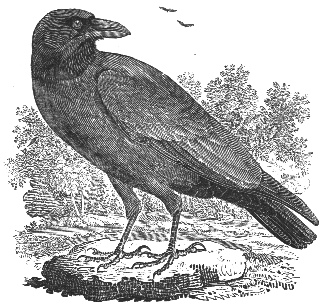
Crow History


1. Eastern Crow


The cooing
was also given in the air

and on one occasion,
I saw a bird drop

slowly down
with wings tilted up

at an angle of forty-five degrees,
singing as he fell.

*

Finally after
many trials
she managed to arrange
a loose array of sticks
in the base
of the fork.

*

I turned back at once
as I had no desire
to disturb the birds'
slumbers but it
was evident
that many,
even at this late hour,
had not settled down
for the night.


2. Western Crow


It was the practise
of the Crows,

after a hot afternoon's work,
to spare themselves the trouble

of flying any considerable
distance to water

by feeding
on watermelons.

*

It is evident
that in such places

ducks could not carry
on nesting

operations
successfully.

*

The flock then rapidly
reacted to the changed
environment by abandoning
attempts at feeding from
the almonds and indeed,
by departing from
the entire region.


3. Northwestern Crow


The old birds
are easy to distinguish
for they sit quietly
in the trees
and gravely watch their young
at play.

*

If the wind is blowing,
they allow for the curve,

and usually do not make
many misses

in their endeavor
to hit a certain boulder.

*

Their most characteristic
one is noted
when the old bird
is feeling especially foolish,
for they duck their heads
toward their feet,
and then give an upward tug,
at the same time
emitting a sound like
the pulling of a cork
from a bottle.


4. Fish Crow

Then away they glide,
from the trees
of the stream banks,

across wide plantations
of truck
gardeners.

*

He adds that they
eat pears,
and are very fond of
ripe figs;
they do considerable damage
to the latter
and have to be driven away
from the fig trees
with a gun.

*

These the Crow
now before us

would frequently seize
with his claws,

as he flew
along the surface,

and retire
to the summit

of a dead tree
to enjoy his repast.


5. Hooded Crow


From the tops
of the pine trees,
they ascended
to a considerable height,
when, hovering for an
instant, they would snap up
an insect and return
to near the former position,
remain for a moment,
and again make an essay.

*

When the observer
rushed up

from a distance
of about 400 yards

both eyes of the
unfortunate animal

had been pecked out
and it was dying,

apparently from injuries
inflicted on the brain

through the
eye sockets.

*

Critical observers
have not generally
considered that they

exercise any
intelligent selection
of hard as opposed

to softer surfaces
for this purpose;
nevertheless there is

evidence that in some
places they have learned
to utilize masonry

or walls
for their
operations.


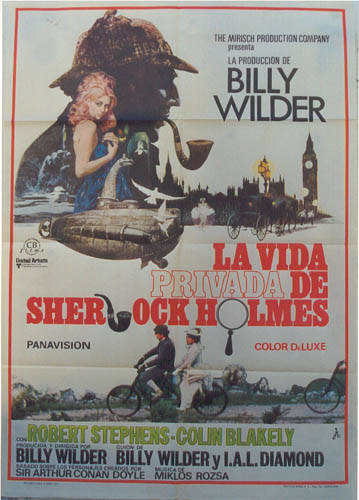
on TCM at 2045 PST Billy Wilder's oddly romantic, lush 1970 Private Life of Sherlock Holmes with Robert Stephens & Colin Blakely


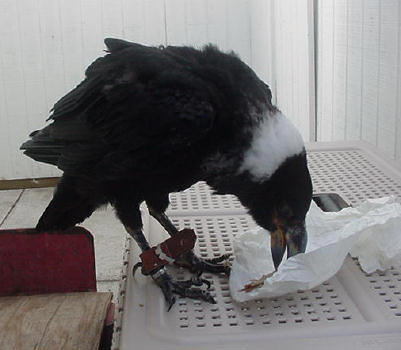
White-Necked Raven


"Quark, quark,"
they yelled, all in the
while settling nearer,--
or so I fancied--
till it seemed
as if they actually
meant violence.

As they often use
old haywire
and cast-off barbed wire
in their nests,
these cause short circuits;
this has cost
one telephone company
$2,500 to $5,500
annually to patrol the line
and keep it clear.

They pounded the air
in vain effort
to outfly their tormentors,
dove to the ground
but were forced
to take wing again,
circled and beat
and tacked to no purpose,
and finally began mounting
steadily in big circles, taking
their punishment
as they went, the
smaller birds keeping above
and beating down on them
in succession until
all were specks
in the sky,
and finally lost to view.

Friday, November 17, 2006


The Bathysphere Adventures

"I pressed my face against the glass and looked upward and in the slight segment which I could manage I saw a faint paling of the blue," wrote Beebe. "I peered down and again I felt the old longing to go further, although it looked like the black pit-mouth of hell itself-yet still showed blue."

Tuesday, November 14, 2006


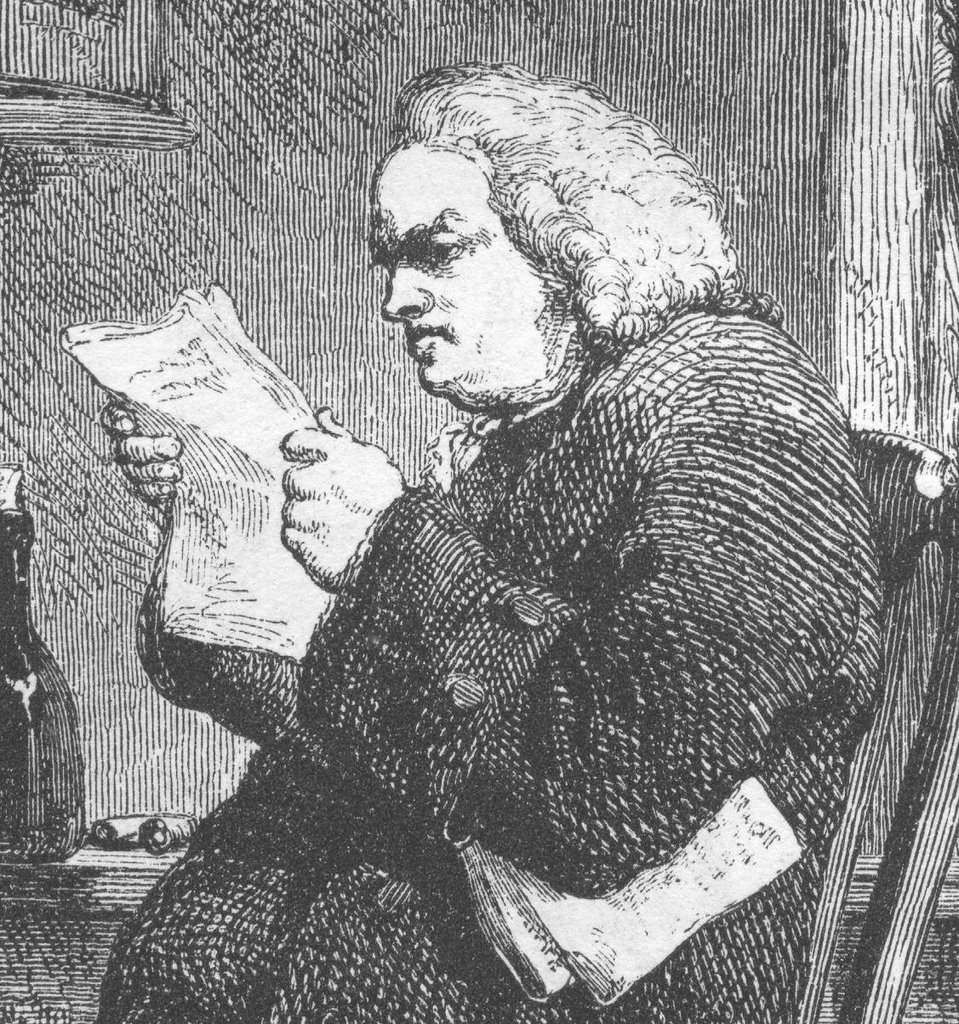
nice piece on The Great Cham--

“His mind resembled the vast amphitheatre, the Coliseum of Rome,” Boswell wrote. “In the centre stood his judgement, which like a mighty gladiator, combated those apprehensions that, like the wild beasts of the arena, were all around in cells, ready to be let out upon him.”

Monday, November 13, 2006

Sunday, November 12, 2006


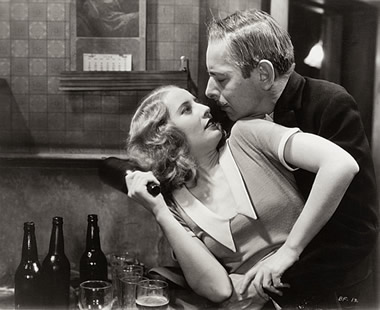
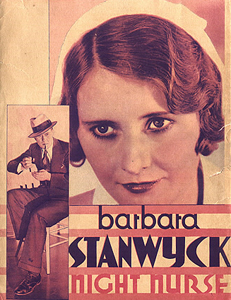
mark your calendars Dec. 4 for TCM's day of "pre-code" Hollywood classics, including the amazing young Barbara Stanwyck in "Night Nurse" & "Baby Face"...

Saturday, November 11, 2006


website has a good selection from Arthur Cleveland Bent's classic multi-volume Life Histories of North American Birds--

"Allen (1919) has called our attention to the time rhythm, which he attributes to a well-developed esthetic sense of the crow. He has noted that the caw notes are not only in triplets but at times they give four caws in groups of two (2-2); again he noted that the bird cawed 2-1 a large number of times in succession and on other occasions 2-1-1. The time was so regular that he could detect no variations. The length of the several notes and their pitch and quality were uniform, the rhythm being all that differentiated the phrase from other performances of the crow.

Allen does not believe the series of combination of calls represents a code of signals, nor does he believe them to be purely mechanical and involuntary, but he thinks the crow takes delight in the rhythm and variety of his utterances. He asks the question, "Is he not, in a limited way, a true artist, a composer as well as a performer ?""

Friday, November 10, 2006


"Hands Over the City"


A walk
on gilded splinters


in terrycloth
slippers

or felt like they
made me wear at Sans-Souci--

polishing the ancient slats--
they should pay you!

quiet as a childhood spent
at Schinkel's Cinecitta

except for the damned dubbing
the same six voices

in every other movie
we ever saw--Barabbas,

The Campbells Are Coming,
A Bullet For Django--RCAF base theatres

then a point of pre-multiplex
distribution somewhere

between 42nd St. &
the edges of the "Old Colonial" Circuit--

so that the unaccented studio
bark colonised my kidspace

bigtime even if I never
even heard Burt's authentic Palermo

grandee or the Calabrese
striver they must have got for Rod Steiger's

Neapolitan Robert Moses/
Donald Trump though

Rosi can't resist letting
him mime out a scene in an empty

office as something out of The Big Knife
volcanic method emotions

rubbing his face out of a broken lamp
with a dampened hanky

and neck sweat for
lip-readers, but then re-embedded

beneath Etna,
under Cinemascope.

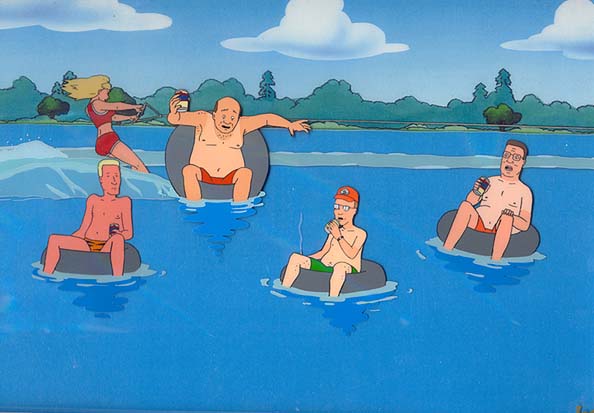
key to election results I think was Bush's alienation of Hank Hill Democrats...(who people like Halperin thought Rove had sewn up in a neat little package)


"Q--King of the Hill has crossed over into politics–the governor of North Carolina talks about reaching out to King of the Hill Democrats--

A--I think it's kind of cool. I didn't exactly know what it meant at first. But then I could see–Hank's not hip, he works a regular job, lives in the middle of the country, and we don't make fun of him. The show is on his side. And in a weird way, that feels like a kind of rebellious thing to do in Hollywood these days. Usually if you have the guy who's the propane salesman, he's the butt of the joke. We take this regular, unhip person and treat him with dignity. So I'm not surprised someone would say that's the kind of person we have to try to appeal to. Because it's almost like a silent majority again..."
oops! look's like the "The Note"'s Mark Halperin gets the Vaughn Meader award--

"How can the same Mark Halperin who today parades around on right-wing radio shows bemoaning the "outrageous" behavior of liberally biased reporters who are out to get Bush and Rove, be the same Mark Halperin who in an October 5, 2004, memo wrote, "I'm sure many of you have this week felt the stepped up Bush efforts to complain about our coverage. This is all part of their efforts to get away with as much as possible with. the stepped-up, renewed efforts to win the election by destroying Senator Kerry at least partly through distortions."

Clearly Halperin has flip-flopped. But why?

I think the answers are pretty obvious. First, he's out shilling a new Karl Rove-is-a-genius book, The Way to Win, which means Halperin has a vested interest -- a financial incentive -- in seeing Rove's Republicans to do well (i.e., a GOP win would reinforce the friendly premise of his book)..."

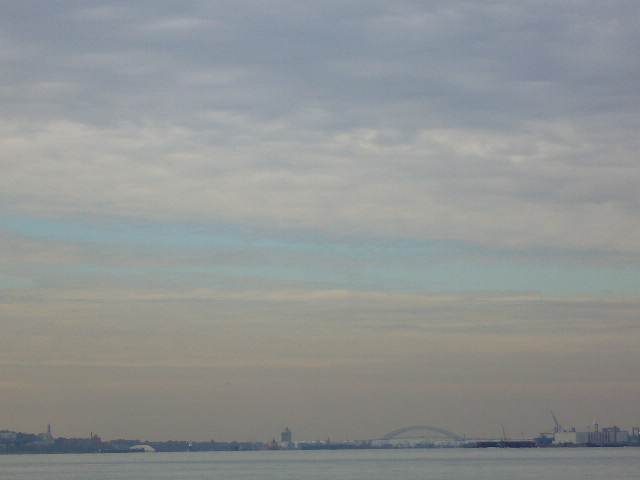
Buttermilk Channel


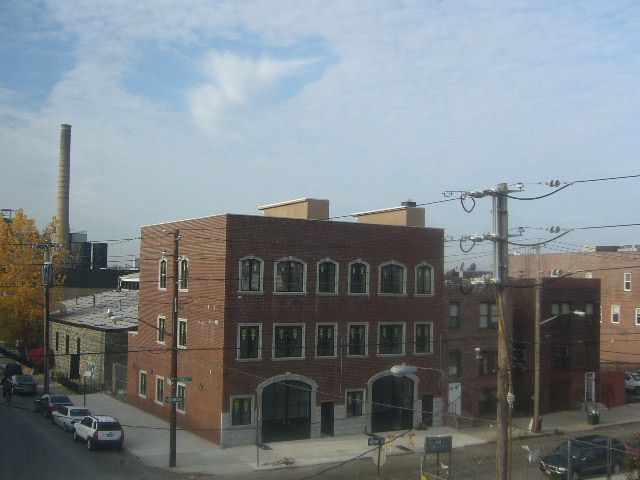
Red Hook


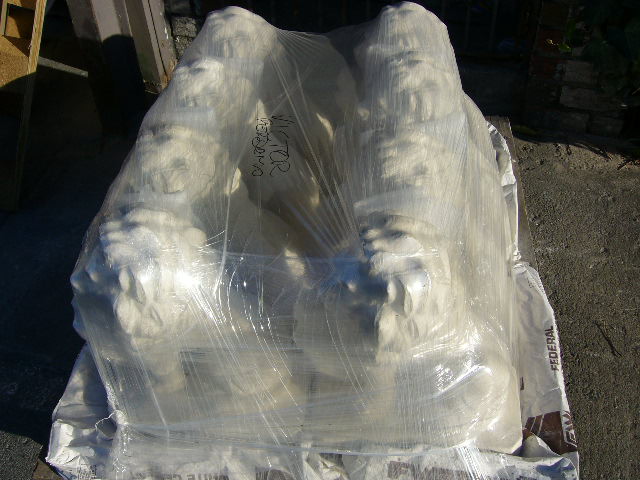
Wrapped Lions Red Hook


Bridge Bangor

many impossible to find books by the likes of Bernadette Mayer, Bruce Andrews, David Melnick, Susan Howe & c. lovingly reproduced at Eclipse

fine Squirrel site--

"A squirrel leaping from bough to bough, and making the wood but one wide tree for his pleasure, fills the eye not less than a lion,--is beautiful, self-sufficing, and stands then and there for nature."
--Ralph Waldo Emerson (1803-1882)

Thursday, November 09, 2006


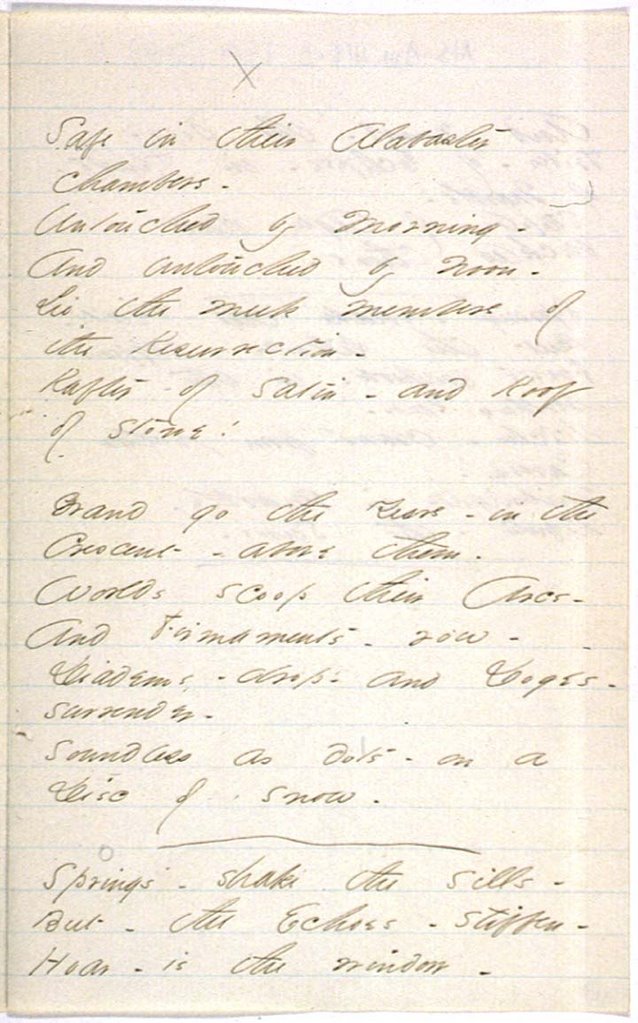
via metafilter Emily Dickinson Writing a Poem

"Emily and Susan Dickinson's exchange over the writing of "Safe in their Alabaster Chambers" indicates that Sue critiqued the text while Dickinson was in the process of writing, that the effects of Sue's responses to reading the poem are evident in its various incarnations. In other words, Sue was a vital participant in the composition and transmission of the poem. Because of that fact and because their exchange features audience response written and received by Emily Dickinson, these writings by and to her, concerning the shape and purview of the poem, are displayed and examined in this demonstration of how part of a Hypermedia Archive of Emily Dickinson's Creative Project might work."


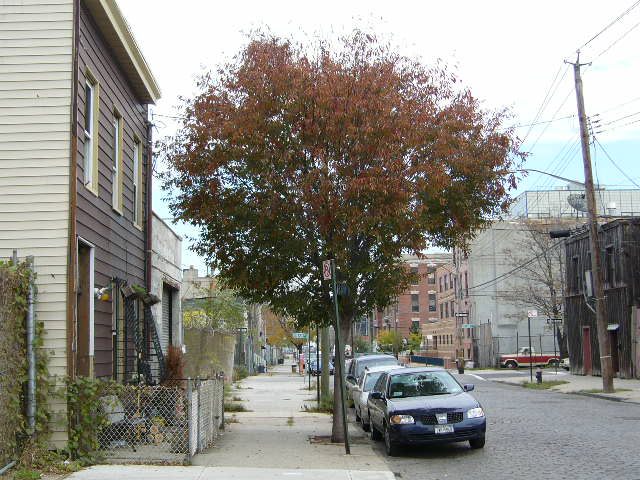
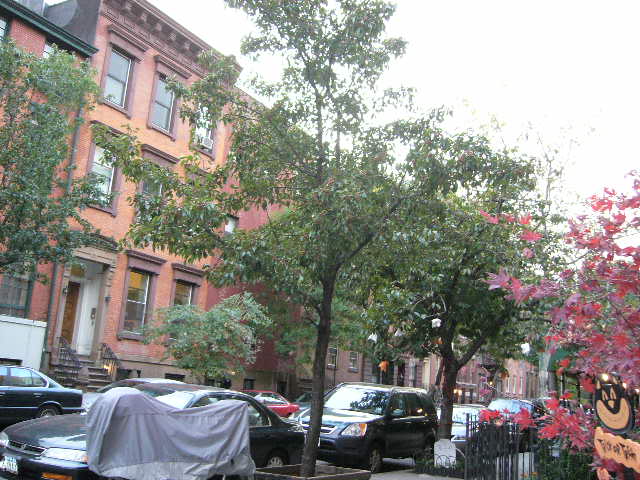
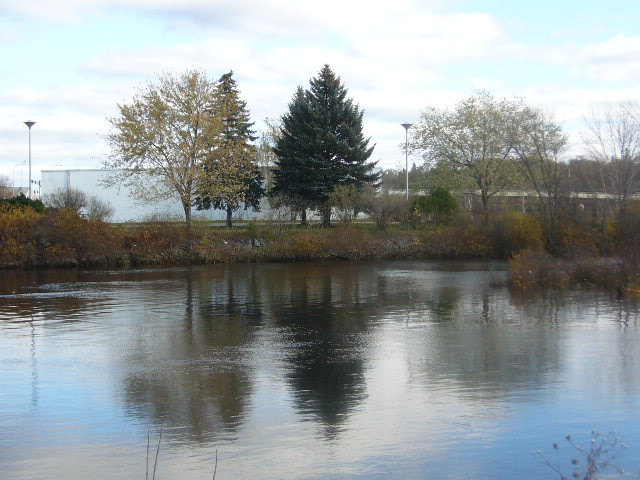
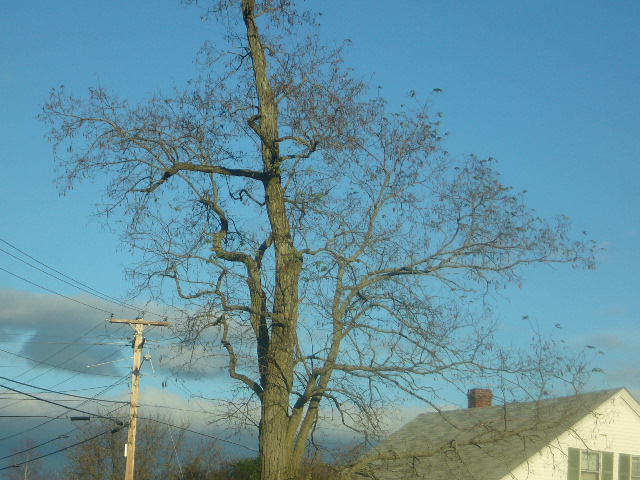
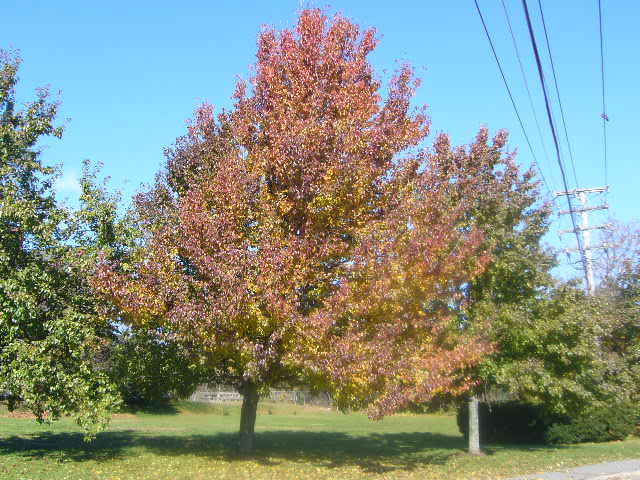
Greenpoint & Williamsburg Trees


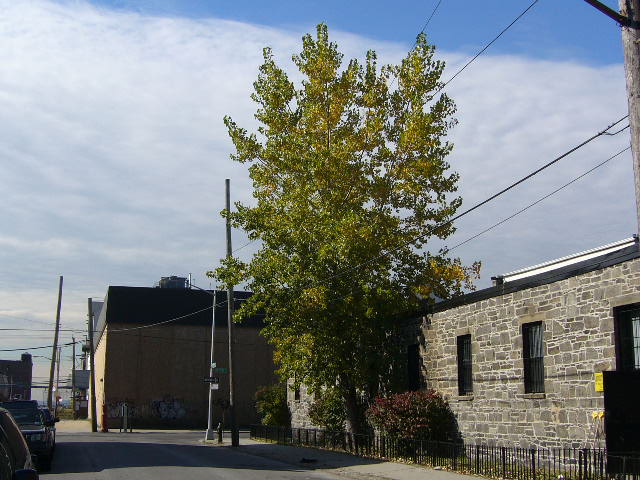
Chelsea Trees & Moon


Bangor Trees


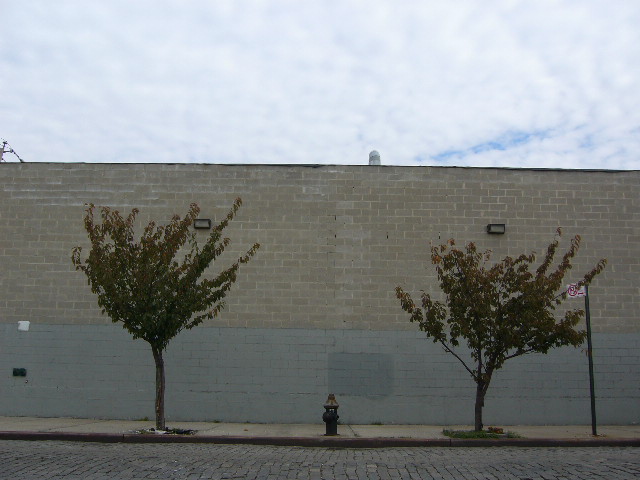
Red Hook Trees