
Dr. Johnson’s Dictionary
WA’YLESS. adj. [from way.] Pathless; untracked.
When on upon my wayless walk,
As my desires me draw,
I, like a madman fell to talk
With every thing I saw. Drayton’s Queen of Cynthia.
WA’YLESS. adj. [from way.] Pathless; untracked.
When on upon my wayless walk,
As my desires me draw,
I, like a madman fell to talk
With every thing I saw. Drayton’s Queen of Cynthia.

The event and its print rendering suggest how scattered Canadian poetry can be — even amongst the closest of poet-friends or within a given generation. Some participants aren’t even interested in the “Canada” question so much as in localism or the phenomenology of language or literary community. Some participants seem, at times, completely uninterested in or marginalized by the parameters of debate altogether. (Atwood, it’s reported, didn’t even stay for the full festival and when she was there wasn’t much of a “presence.” D.G. Jones has the thankless task of trying to remind festival-goers of the burgeoning formalist movement in Montreal.) In the end, mercifully, there doesn’t appear to be any desire to dutifully represent the “cause” of CanPo as a unified Maple-syrupy front of sweet golden goodness for the pancake of Buffalo...
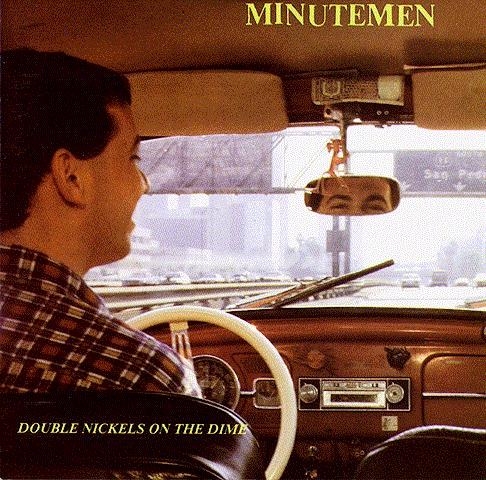
Teen years I wrote this song called "Mr. Bass King Outer Space" about blowing everybody away with a bass solo. I never wrote a song, you know? We had no thing in it - no craft. You know? It's just words. Words were like - Bob Dylan was some weirdo showed up at Thanksgiving muttering. All the other words, T. Rex, Alice Cooper. Alice Cooper, you didn't think twice with Alice! You know, he's in a band - "Be my lover." What does that mean? Well, you don't even think twice about what anything means. It's like lead guitar. They're just sounds. Smoke off water - what is that? Smoking the bong? What I found out later, it was literally about a fire or something, but that didn't help. I liked it better when we thought it was bongwater, bong smoke. We didn't know what any of them - what words were for. Words come on us. Sorta like a Lenin pamphlet, you know? What is to be done. What is to be done? But then the Trotsky thing, with the pen knife, all the art. He murdered a lot of people - the pen knife. The art uses the pen knife, it is what is to be carved, eh? We know this - it's like a bicycle, after a while you don't fall down, but is it really about riding with no hands, upside down, on one wheel? No. Where are you going to fucking take the bike? I told those kids at the bass seminar - there's granddaddy fusion at the end of the hallway - "more notes, more notes!" - luckily, physics punishes, because the more notes you play, the littler we get. Same thing with writing.


...is also Laura Dern's bravura role. As her character falls down the rabbit hole she switches with razor-sharp precision from Hollywood princess to Southern belle to downtrodden housewife to battered street prostitute, inhabiting each one with absolute clarity and truth. A marathon brutal monologue, delivered to a silent, sweaty bald man in glasses in a seedy back room, is so shockingly intense and real that you feel you are living it with her. It must be the most remarkable performance by an American actress in the last decade, and it was almost completely ignored...INLAND EMPIRE, a round-table Alternate Take

Inside the chamber is an enormous Buckminster Fuller sphere with 9600 photomultiplier tubes which itself sits inside a forty foot acrylic sphere filled with 1,000 tons of heavy water...



A Woody Allen fan, Case chooses Radio Days (1987) as her favorite Allen film with its “celebration of the entertainment industry.” Elia Kazan’s A Face in the Crowd (1957) remains “shocking” to her in its satire of the corruptive power of television. She admires Orson Welles (“a force of nature”) and Joseph Cot- ten (“the foxy Everyman”) in Carol Reed’s The Third Man (1949). The Picture of Dorian Gray (1945) casts a spell on her with its Oscar Wilde dialogue and appeal to “art-history nerds.” A bonus in Case’s selections is a collection of Dogville shorts from the 1930s...


In the winter of 1872, the Letters page of The New York Times was briefly invaded by scrapple.
It all started with one reader’s paean to his favorite breakfast food. Calling himself “EPICURE,” he pronounced the dish—a Spam-like slab of cornmeal and pig parts—both delicious and inexpensive. If anyone was interested, he continued, he’d be delighted to share his good lady’s recipe...


